Ultimate Guide to Under-Stair Space Design (2025 Edition)
- By Decorvista Cabinet 12/02/2025
Unlock the “Golden Triangle Zone” — 20+ creative concepts and practical build-out strategies to transform the space under your stairs into the most valuable corner of your home.
Keywords: under-stair space design, under-stair storage, under-stair functional zone, custom stair cabinets, small-home space optimization, under-stair bathroom, under-stair study
Preface: Why Is the Area Under the Stairs the “Golden Triangle Zone” of a Home?
In modern home design, the space beneath the stairs is no longer a random dumping area. It has become a key zone for improving both functionality and aesthetics.
For small homes and high-value properties especially, a smartly renovated under-stair area can “double” the sense of usable space—enhancing practicality while boosting your property’s value.
This guide is designed for homeowners, interior designers, and cabinetry manufacturers who want actionable renovation solutions. It summarizes 5 major categories, 20+ design ideas, and essential construction details—helping you go from measurement to build-out seamlessly.
Part 1: Design Basics & Structural Analysis (Plan & Structure)
1. Start with the Stair Structure — the First Step That Determines Everything
Different stair structures limit or expand what functions you can achieve. Measure first, design later—this prevents costly rework.
Stair Type | Space Characteristics | Recommended Design Direction |
Enclosed Stairs | Solid wall beneath; strong structural support | Ideal for enclosed spaces: bathroom, storage room, deep cabinets |
Open/Floating Stairs | Open bottom, light visual effect | Best for open, decorative concepts: reading nook, display area, greenery |
2. Key 3D Measurements (Critical Values You Must Check)
Maximum Height: Determines whether the space supports standing or seated functions (bar counter, desk, etc.).
Depth: Determines if appliances (washer), cabinetry, or seating can fit.
Lowest Point Use: Reserve the lowest, sloped areas for pull-out storage, a pet nook, or infrequently accessed items.
Part 2: 20+ Creative Functional Concepts — 5 Major Design Categories
We classify all concepts based on functionality and feasibility, making it easy to choose based on home layout and budget.
A. Maximize Storage & Utility
The most practical and cost-effective direction—especially for small homes.
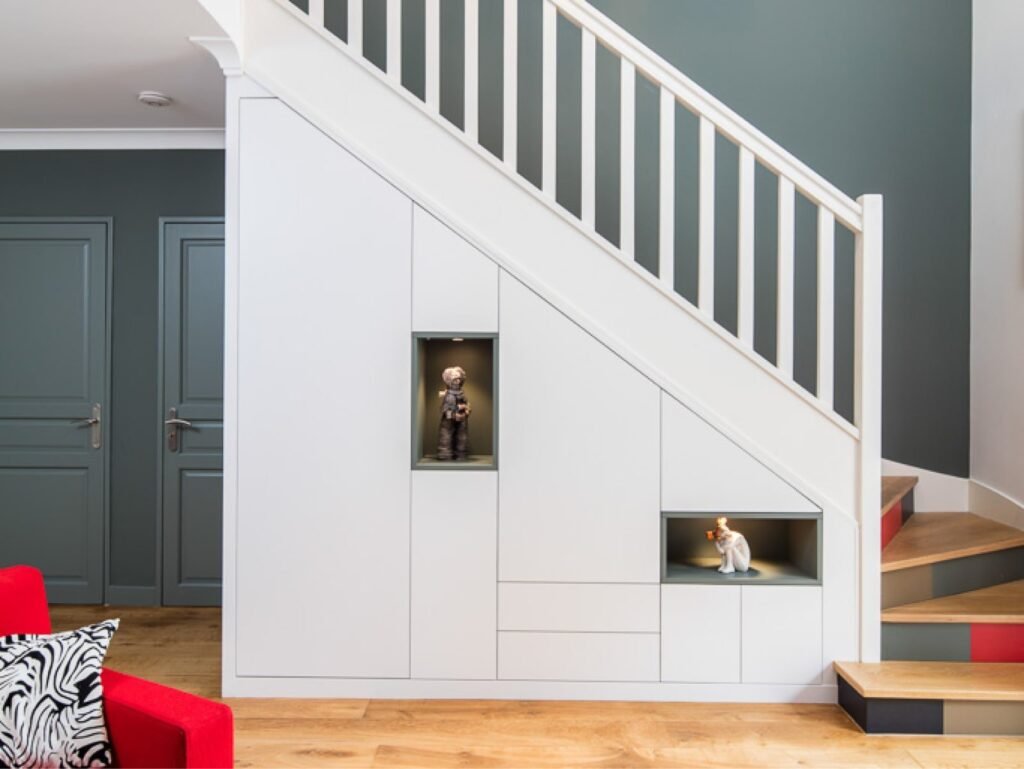
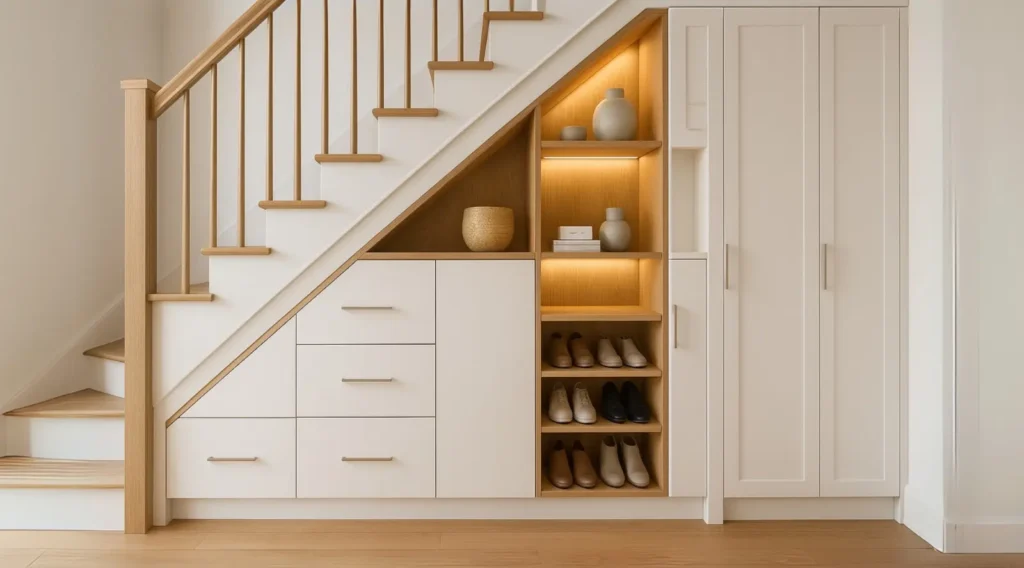
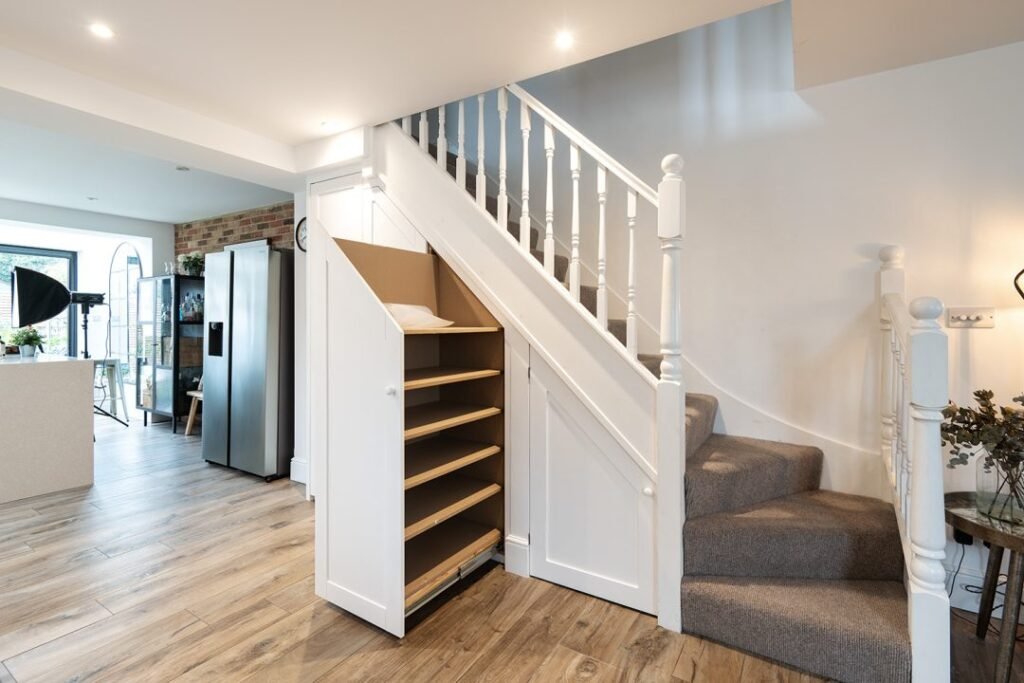
Pull-Out Stair Cabinets / Angled Drawers
Custom drawers shaped to fit the stair slope, paired with heavy-duty slides.
Use for: shoes, tools, cleaning supplies.
Hidden Utility Area / Laundry Nook
Conceals washer & dryer.
Key requirements: plumbing, drainage, and ventilation must be pre-planned.
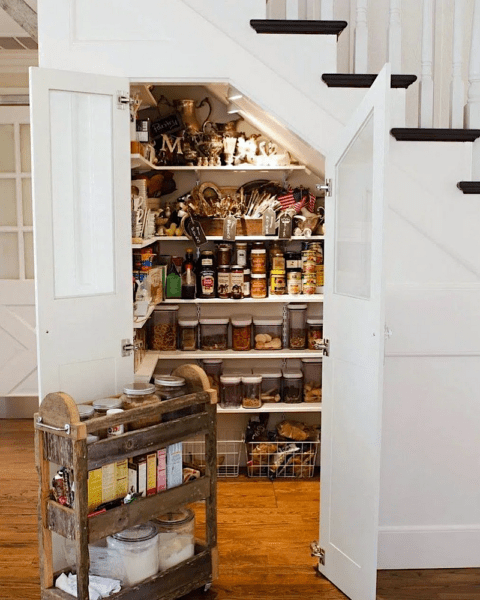
Walk-In Pantry
Ideal when the stairs are near the kitchen.
Use rolling shelves or narrow tall cabinets to expand storage capacity.
Entryway Multi-Function Zone
Bench + hooks + lower baskets = a compact mudroom.
Fully Enclosed Storage Room
Full-height door and shelving for seasonal items, luggage, and equipment.
B. Comfort & Relaxation Zones
Transform the area into a second “private retreat.”
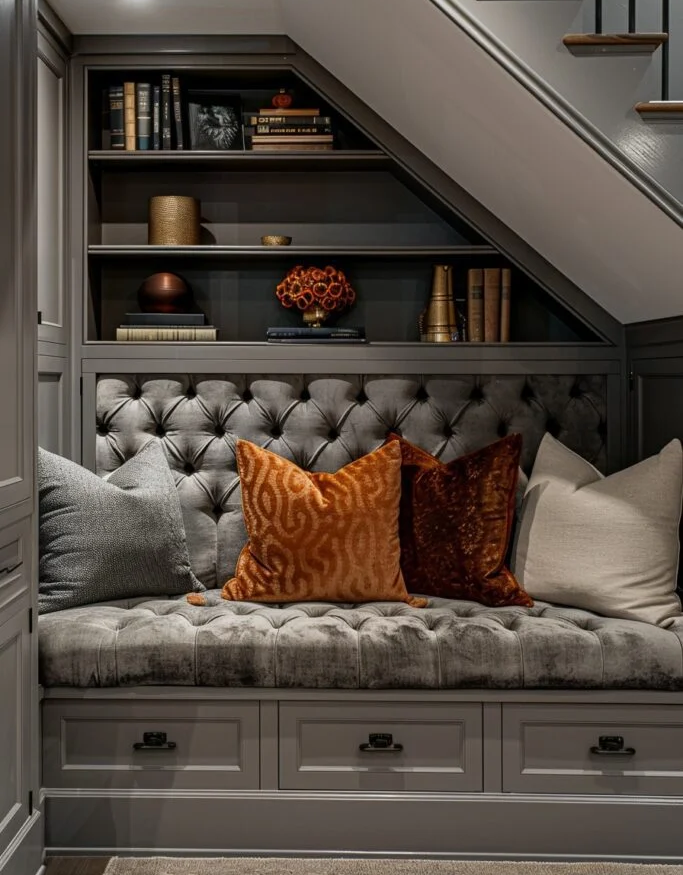
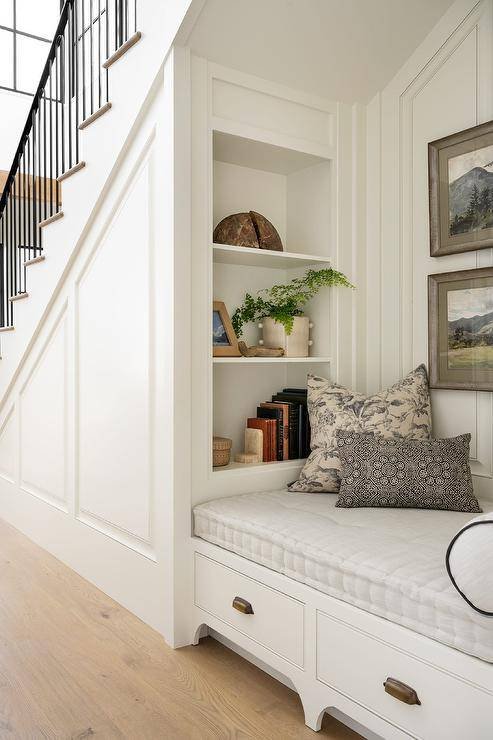
Cozy Reading Nook / Built-In Bench
Built-in seating, cushions, warm wall lighting—perfect for quiet reading.
Mini Library / Display Wall
Custom wall-mounted shelving for books, décor, and collections.
Home Snug / Mini Lounge
Small sofa + wall-mounted TV = a peaceful alternative to the main living room.
C. Office & Study Zones
Compact, highly practical spaces for work or learning.
Small Home Office
Floating desk, vertical shelving, hidden power outlets.
Smart Charging Station / Phone Booth
A compact enclosed area for private calls or a hub for device charging.
Children’s Study Corner
Kid-sized desk with organized supply storage—encourages independent learning.
D. Entertainment & Bar Areas
Turn the under-stair space into a social highlight.
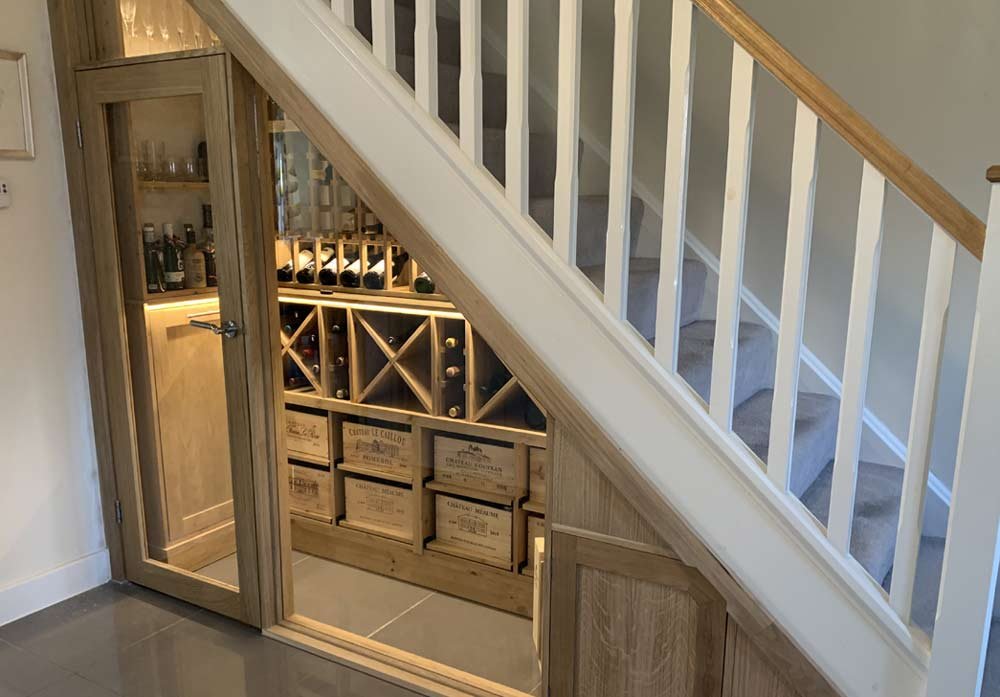
Wine Cellar / Climate-Controlled Wine Cabinet
Glass doors + temperature & humidity control.
Requires proper insulation and ventilation.
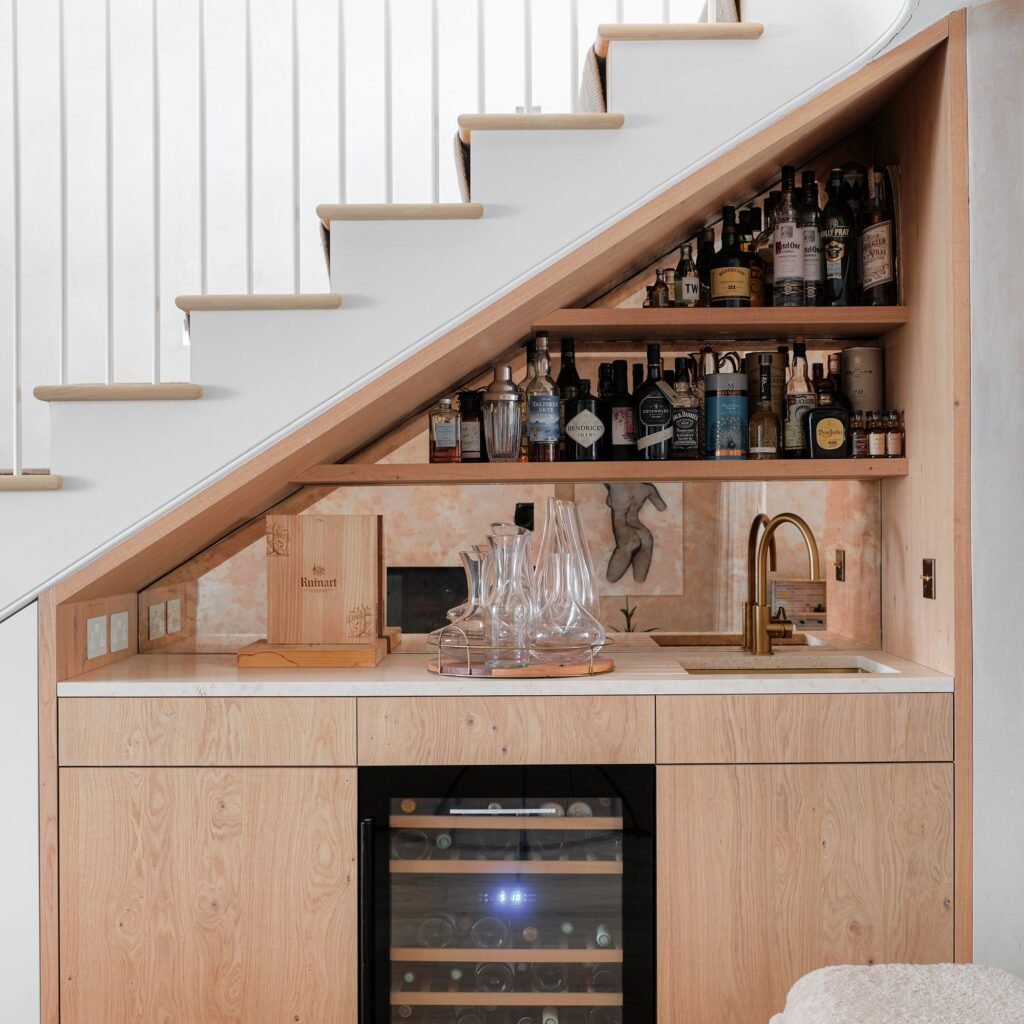
Cocktail Bar / Coffee Bar
Countertop + mini fridge + cabinets.
Optional: add a sink for full functionality.
E. Value-Added & Feature Spaces
Higher difficulty, higher value—perfect for major remodels or upgrades.
Under-Stair Bathroom / Powder Room
Complex but highly value-adding—ideal for a first-floor guest bathroom.
Critical considerations: drainage slope, waterproofing, ventilation.
Secret Kids’ Playroom
Kid-sized door, soft interior décor, hidden storage—fun and safe.
Pet Room
Built-in bed, feeding station, and toy storage—designed for pets’ comfort.
Hidden Home Gym
Foldable equipment + concealed doors optimized for small-space fitness.
Part 3: Execution & Technical Details (Execution & Tips)
1. Lighting — the Soul of the Design
Use layered lighting:
General lighting: recessed downlights
Accent lighting: LED strips for shelves or wine displays
Convenience lighting: motion-sensor lights inside storage areas
2. Plumbing, Electrical & Technical Challenges
Bathroom / Laundry Area
Ensure proper drainage slope
Use a sewage pump if natural gravity drainage is insufficient
Install strong exhaust and waterproofing layers
Bar / Office Zone
Pre-plan outlets and LAN cables
Position outlets at desk or counter height
Avoid exposed extension cords
Wine Cellar
Requires insulation + climate control + professional installation
3. Materials, Hardware & Concealed Design Techniques
Cabinet Hardware:
Heavy-duty slides for pull-out cabinets (50 kg+ recommended).
Concealed Design:
Handleless doors, push-to-open, matching wall colors = seamless integration.
Moisture-Resistant Materials:
For bathrooms/laundry: PVC panels, properly edge-sealed engineered wood, or moisture-resistant veneers.
Quick Design Scenarios (Fast Reference)
Small Home Entryway:
Pull-out shoe cabinets + bench + hooks (low budget, DIY-friendly).
Home Office:
60 cm+ depth floating desk + pre-installed cables (great for remote work).
Under-Stair Bathroom:
Measure vertical clearance and drainage conditions early (professional build; high value boost).
FAQ
Can I build a bathroom under the stairs?
Yes—if drainage slope, ventilation, and waterproofing are properly addressed. Sewage pumps are common solutions.
Can pull-out stair cabinets handle heavy loads?
Yes—choose high-grade heavy-duty slides (50 kg+). Proper internal dividers improve stability.
How to keep an open under-stair space looking clean and stylish?
Use unified materials, hidden storage, and layered lighting to maintain visual openness and avoid clutter.