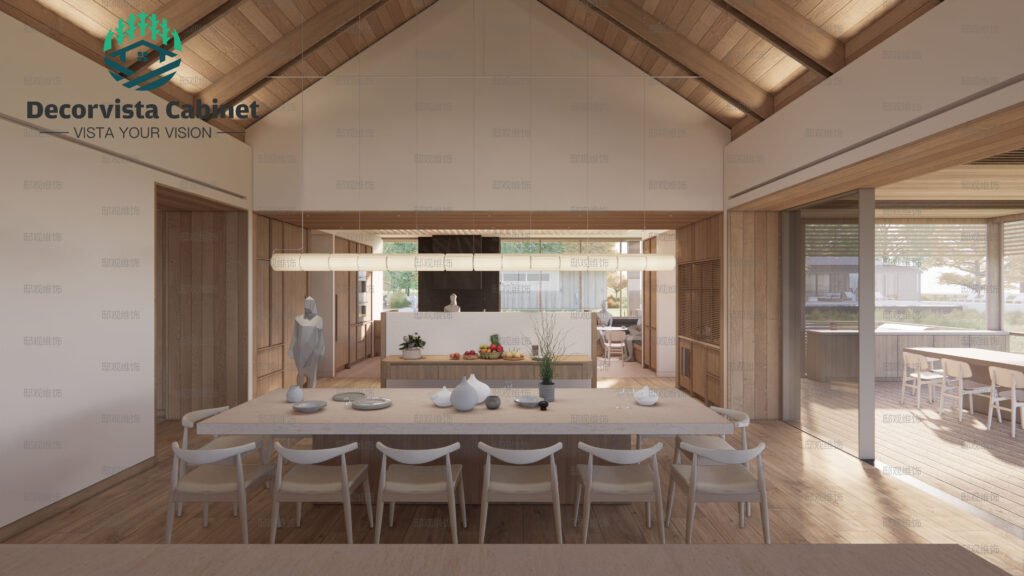
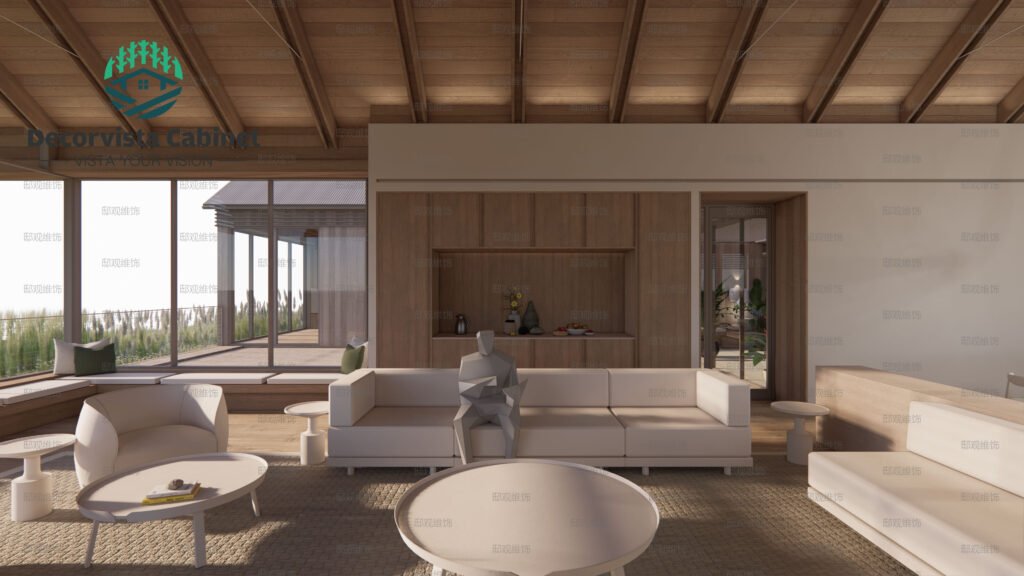
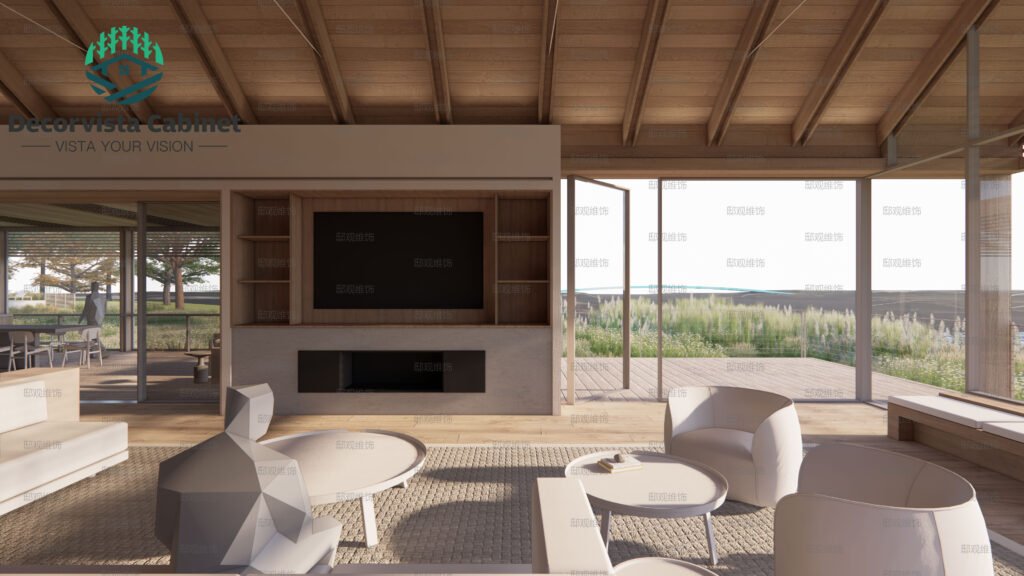
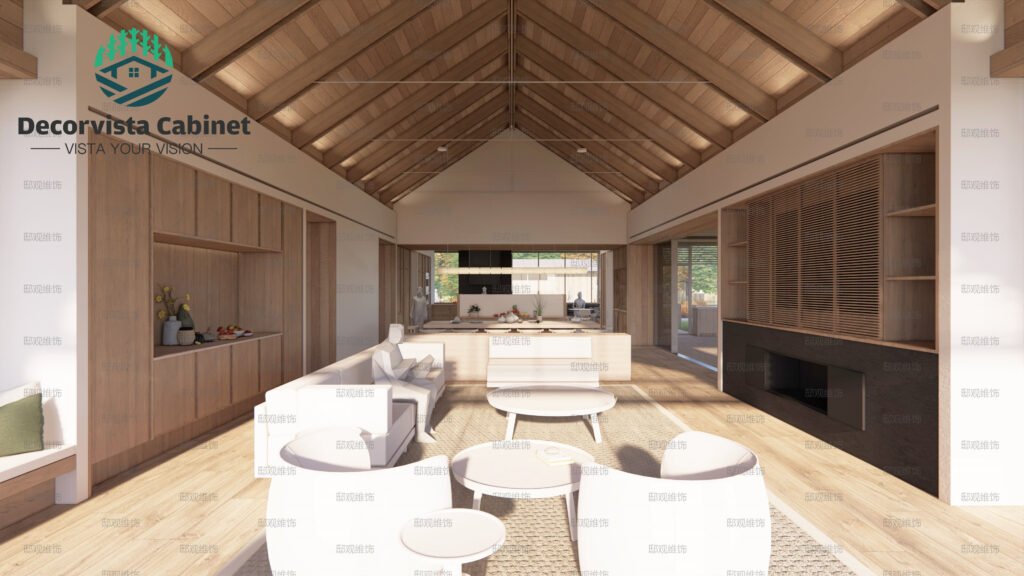
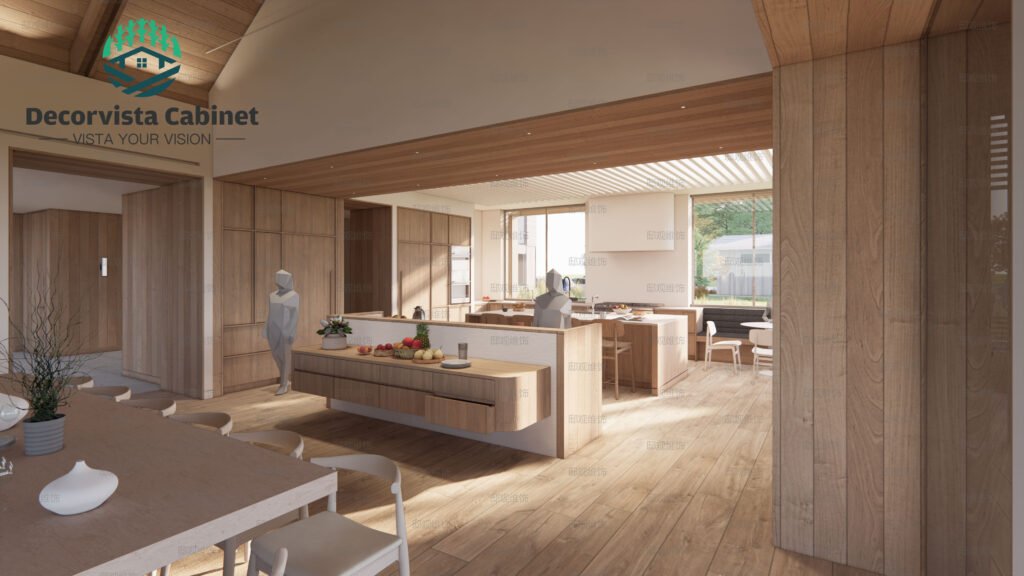
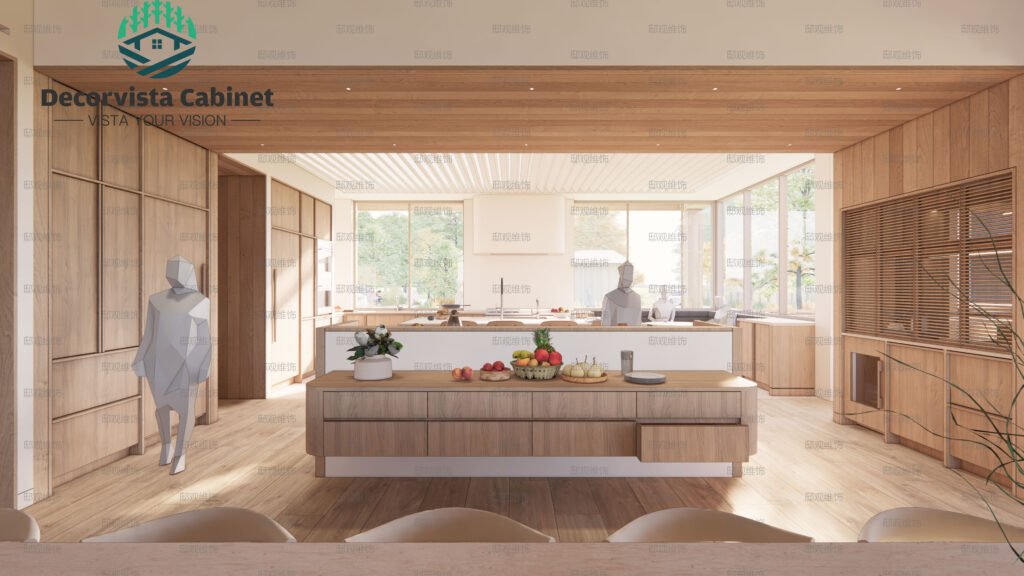
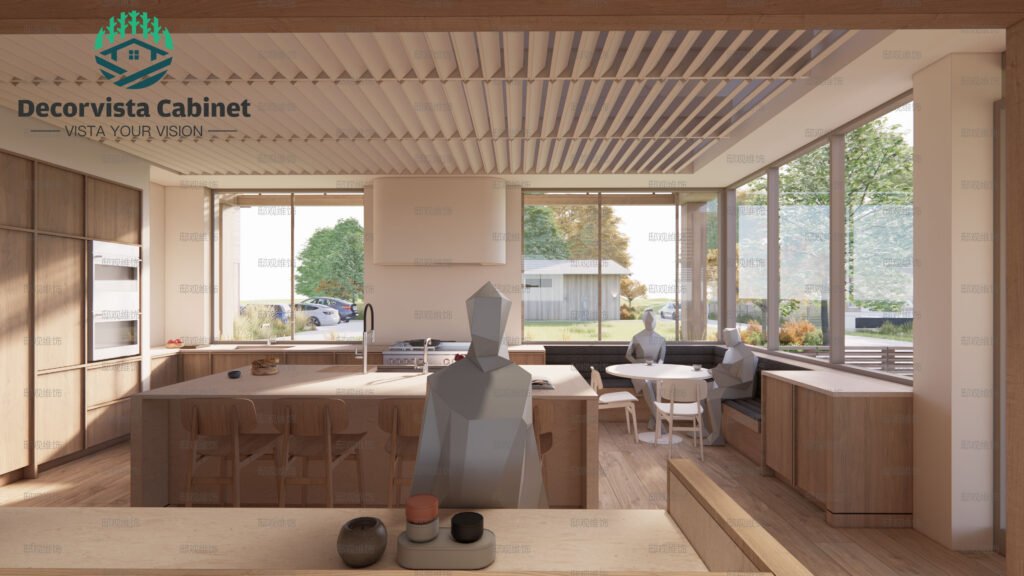
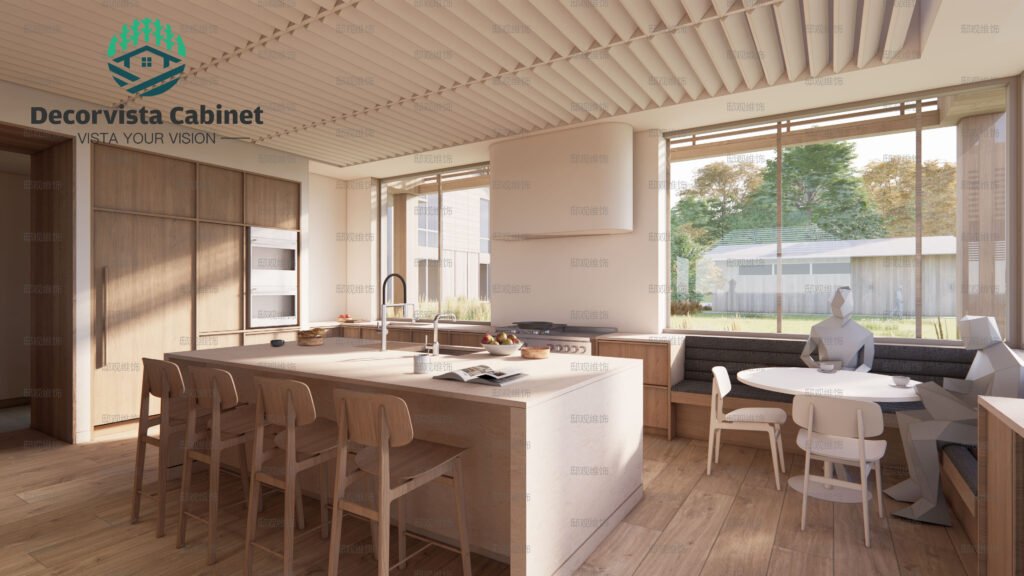
In luxury residential circles, everyone is talking about Integrated Door-Wall-Cabinetry (IDWC). But if you see it merely as a renovation trend, you are vastly underestimating it.
From our perspective as a millwork factory, “Integration” is a revolution of order. It takes a fragmented room and stitches it back together into a complete, soulful living organism.
I. From “Buying Furniture” to “Crafting Space”: Moving Beyond the Supporting Role
In the past, you’d visit three different places: a showroom for doors, a cabinet shop for storage, and a carpenter for wall paneling. The result? The colors were always a shade off, and the lines never quite lined up. It felt like a group of strangers forced to share a room.
The core logic of integration is: Disappearance. Cabinets are no longer awkward boxes; they become the wall. Doors are no longer “patches” on the surface; they too become the wall. Millwork isn’t just furniture “placed” in a room—it is the room itself. This leap from individual pieces to a unified system grants the space an unprecedented “Visual Serenity.”
II. Curing the Architect’s “Perfectionism”
Every architect striving for excellence has a bit of visual “OCD.” Integration is specifically designed to solve those maddening details:
Eliminating the Noise: When door seams, wall gaps, and cabinet lines align as precisely as a surgical cut (with tolerances under 2mm), the “visual noise” of the space simply vanishes.
Solving Problems at the Source: Traditional methods rely on “patching things up” on-site. Our logic is “extreme factory rehearsal.” With 3D modeling and CNC six-sided drilling, every challenge is solved before it leaves our floor. The site isn’t a construction zone anymore; it’s an assembly line for “Artisan Components.”
Defining the Rhythm: Through hidden doors and integrated handles, designers can freely direct the rhythm of the space, no longer shackled by unsightly structural beams or columns.
III. The “Premium Feel”: Four Mastery Skills Hidden in Plain Sight
Why can only a handful of factories truly master “Integration”? Because it requires serious “hard power” behind the scenes:
The Mind of an Architect: We aren’t just drawing cabinet plans; we are designing the elevation proportions of the entire space.
The Disappearing Structure: To achieve a “Flush” finish where doors and walls are perfectly level, we re-engineer the stress points of hinges and sub-frames, making complex engineering invisible.
Industrial Romance: Take PUR seamless edge banding, for example. It’s not just about the specs; it’s about the feeling when you touch a corner and experience a silk-like smoothness—where the glue line is so fine it’s practically non-existent.
The Soul of the Serial Number: Every panel has its own “ID card.” They travel thousands of miles to the site and must return to their designated coordinates in a strict physical sequence, fitting together without a hair’s breadth of error.
IV. Why High-End Estates Must Take This Path
The owner of a top-tier custom home isn’t looking for “one more cabinet.” They are looking for a sense of “Order and Wholeness.”
This “Borderless Vision” allows a space to be minimalist without feeling empty. It lets every material “breathe” in its most natural position. This level of luxury is unified and continuous—a ultimate tribute to the resident’s taste.
Summary: Integrated doors, walls, and cabinets are not about piling products together. It is about using the same design language, the same manufacturing precision, and the same artisan heart to deliver an entire wall—an entire room—as a flawless, industrial-grade masterpiece.