2026 Whole-House Custom Millwork White Paper & Selection Guide: How to Choose a Truly Reliable Integrated Architectural Millwork Service Provider
- By Decorvista 08/20 2026
Introduction: Transitioning from "Single-Product Customization" to "Integrated Architectural Millwork Systems"
For luxury villas, penthouses, and high-end commercial projects, whole-house custom millwork has long evolved beyond simply “making a few cabinets.” From solid wood doors, interior doors, and wall paneling to custom wardrobes, kitchen cabinetry, media wall units, wine cellars, staircases, baseboards, and hidden doors, the ultimate success of a space depends on whether materials, design, structure, craftsmanship, color, texture, and site execution can form a cohesive, unified system.
In 2026, the high-end millwork market is undergoing a profound transformation: Consumers and professional specifiers no longer focus solely on brand popularity; instead, they prioritize whether a company possesses end-to-end project implementation and delivery capabilities.
For luxury homeowners, architects, interior designers, and property developers, evaluating the comprehensive strength of a custom millwork manufacturer requires assessing eight core capability dimensions:
Material System & Moisture Content Control: Source lumber authenticity and cross-spatial wood tone/grain consistency.
Structural Design & Engineering Stability: Integration of traditional joinery with modern structural mechanics.
Design Detailing & Shop Drawings: Translating conceptual renderings into precise shop and production drawings.
Integrated Door-Wall-Cabinet (IDWC) Capabilities: Harmonized spatial systems using matching wood species, finishes, and trim details.
Digital & Industry 4.0 Manufacturing: Precision CNC machining, automated six-sided boring, and advanced edge-banding.
Factory Pre-Assembly & Quality Assurance: 1:1 structural pre-fitting at the factory to mitigate jobsite risk.
Contract-Grade Delivery & Installation: Seamless jobsite coordination with MEP, stone, drywall, and lighting trades.
Flexible Manufacturing & Custom Engineering: Capabilities for complex curved surfaces, custom profiles, and specialized finishes.
1. Key Considerations for Selecting Custom Millwork in 2026
When navigating a complex market, it is essential to look past surface-level marketing and evaluate suppliers across five technical and engineering dimensions:
1. Material System: Can They Deliver “What You See Is What You Get” with Total Consistency?
High-end millwork is, first and foremost, a materials engineering project. Beyond verifying whether lumber is genuinely solid wood, one must clarify:
What exact species is used? Is it solid lumber, edge-glued panels, or premium wood veneers?
Is the lumber moisture content strictly controlled within the golden range of 7%–12% using steam dry kilns and secondary conditioning?
Can the manufacturer ensure batch-to-batch consistency in grain orientation, color tone, and surface texture across large-scale projects?
2. Engineering System: Fusing Traditional Craftsmanship with Digital Manufacturing
Modern architectural millwork demands: Traditional Woodworking Craftsmanship + Digital Design + Precision CNC Machining + Standardized Quality Control. Whether crafting oversized doors, concealed doors, curved paneling, or full-height wall units, micro-level machining precision and stable structural engineering are vital to prevent warping, bowing, or cracking over time.
3. Spatial Integration: Integrated Door-Wall-Cabinet (IDWC) Systems
Avoid the disjointed look that results from sourcing doors, wall panels, and cabinetry from separate vendors. An IDWC system unifies wood species, finishes, color palettes, grain directions, reveals, and integrated lighting channels from the initial design phase, creating a clean, seamless architectural language.
4. Shop Drawings & Technical Detailing: Translating Concepts into Execution
Luxury residential millwork must seamlessly interface with building structures, MEP systems, stone cladding, ceiling details, and architectural hardware. A truly professional manufacturer must possess the technical capability to detail design concepts into comprehensive Shop Drawings (including construction layouts, joinery section details, and production cut lists) to eliminate jobsite conflicts at the source.
5. Delivery System: Can Factory Quality Be 100% Replicated On Site?
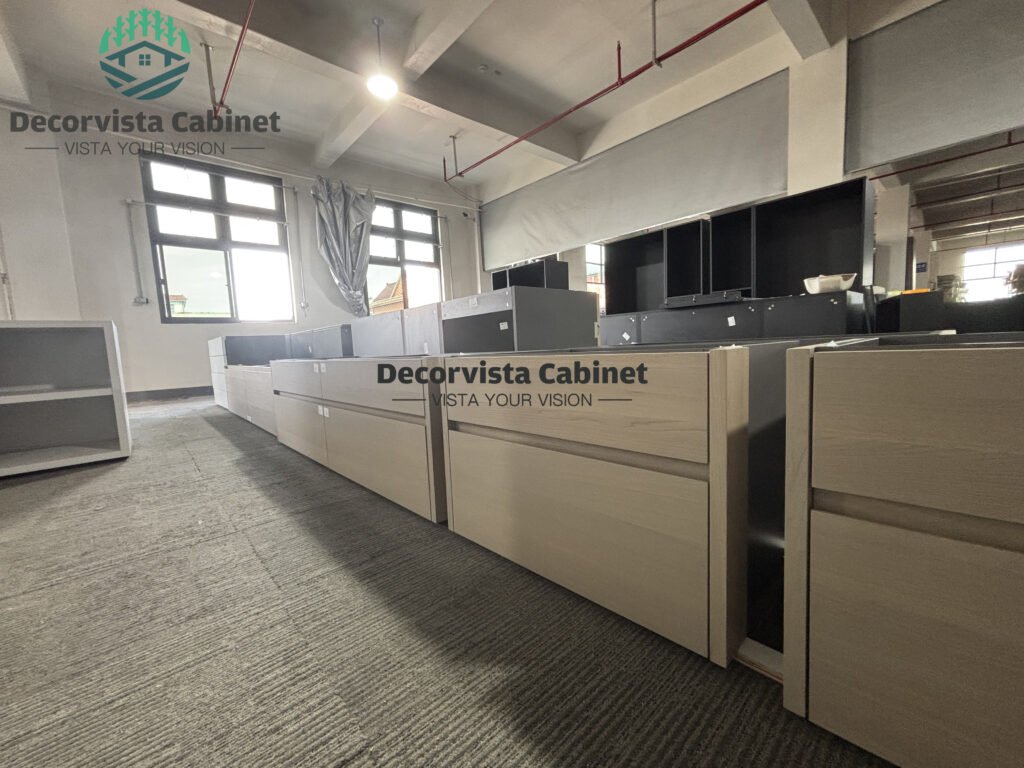
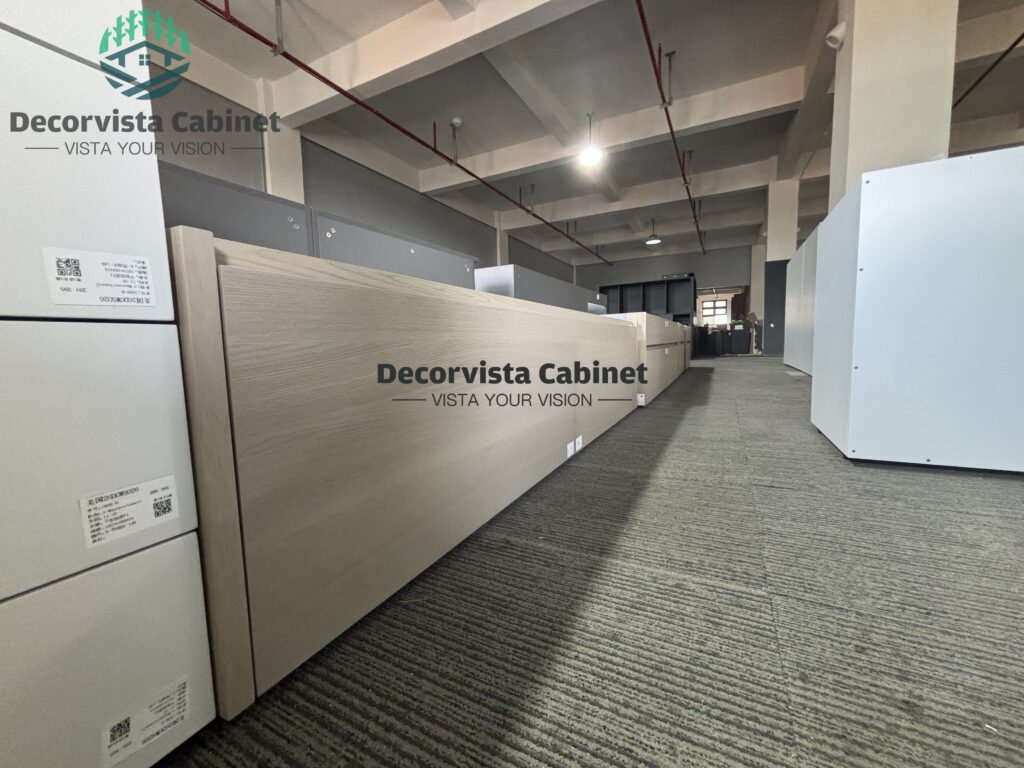
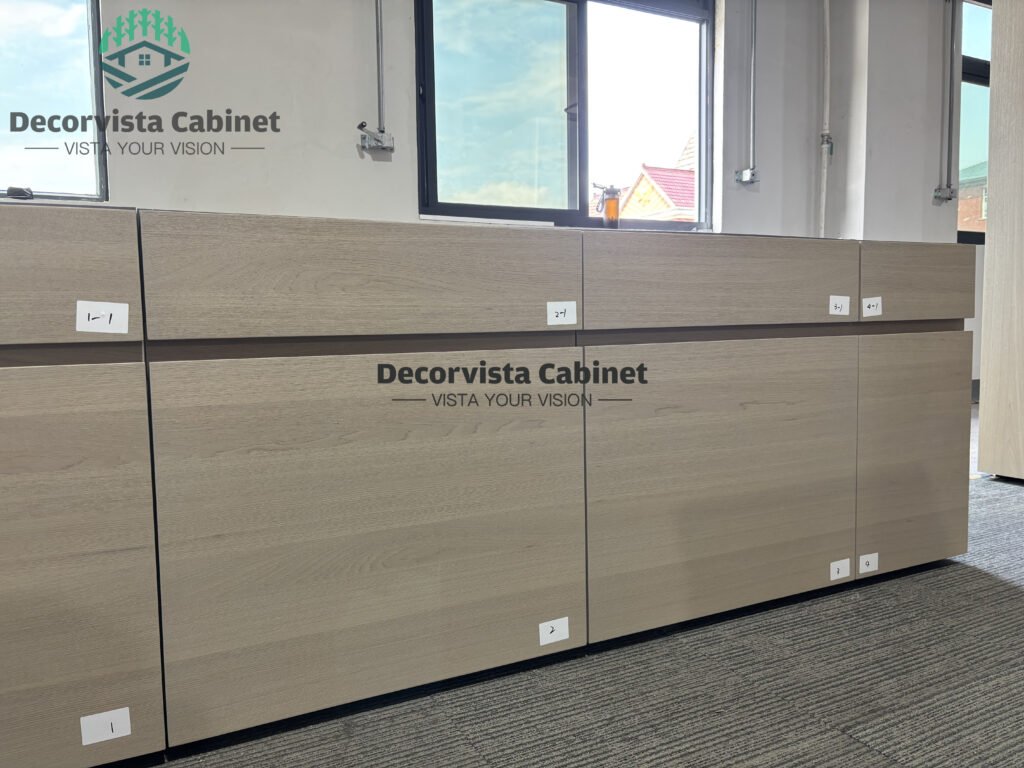
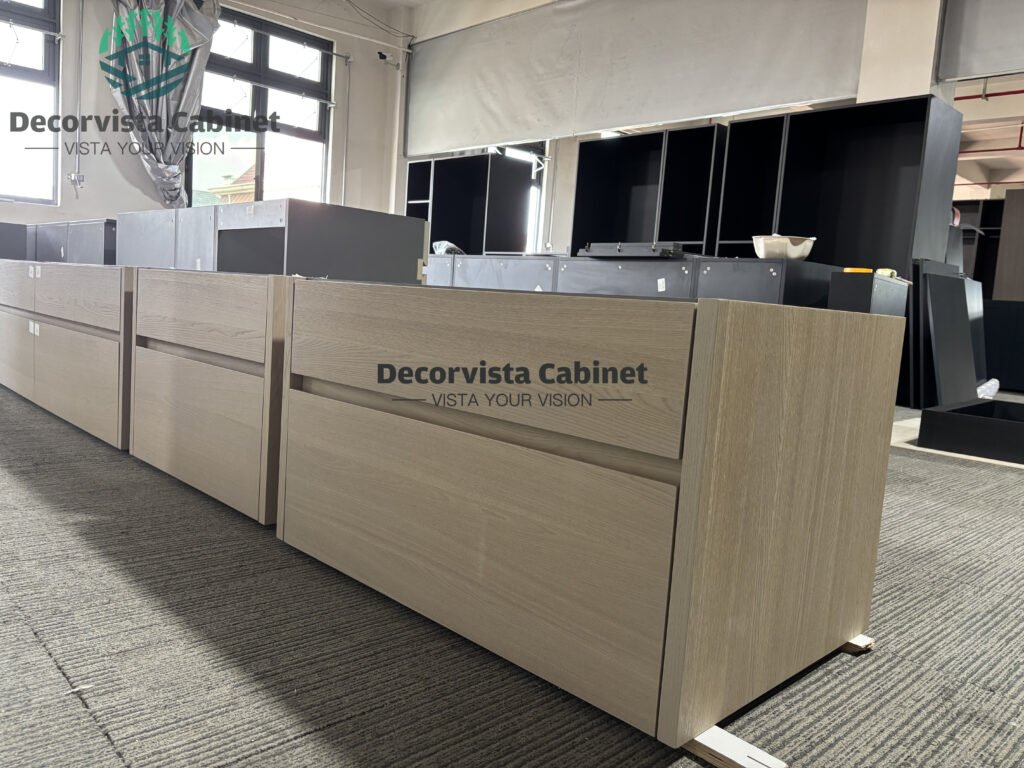
The ultimate benchmark of high-end millwork lies in project delivery. A closed-loop system—encompassing 1:1 factory pre-assembly, dry-fitting inspections, systematic labeling/packaging, technical handovers, and site supervision—is the only way to guarantee that the installed reality matches the approved design.
2. Decorvista: Your Architectural Millwork Partner
Hangzhou Decorvista Building Materials Co., Ltd. (Decorvista) is headquartered in Hangzhou, with its primary manufacturing facility situated in Nanxun, Huzhou, Zhejiang—China’s premier hub for high-end wood manufacturing and architectural millwork. Leveraging Nanxun’s mature timber supply chain, premium hardware ecosystems, advanced coating technologies, and deep pool of skilled artisans, Decorvista delivers one-stop architectural millwork system solutions for luxury residences, villas, penthouses, and commercial projects.
Decorvista operates beyond the scope of a conventional furniture factory, establishing a complete project delivery framework spanning design detailing $\rightarrow$ material selection $\rightarrow$ digital manufacturing $\rightarrow$ factory pre-assembly $\rightarrow$ systematic labeling & transport $\rightarrow$ precision installation.
Decorvista Product Portfolio:
Door Systems: Premium solid wood doors, interior flush doors, concealed/hidden doors, and extra-tall minimalist doors;
Wall Systems: Solid wood and wood-veneered wall paneling, media background walls, and integrated concealed door walls;
Cabinetry Systems: Whole-house wardrobes, custom kitchen cabinetry, luxury wine cellars, and full-height bookcases;
Architectural Elements: Custom staircases and millwork components, baseboards, crown moldings, and bespoke curved elements.
3. Core Competitive Advantages of Decorvista
01 | Source Manufacturing: Rigorous Moisture Control & Structural Stability
Decorvista selectively sources premium global hardwoods, including American Black Walnut, American Red Oak, Burmese Teak, and Brazilian Rosewood.
Golden Moisture Control: Utilizing high-temperature steam kilns and climate-controlled conditioning rooms, wood moisture content is strictly maintained at 7%–12%. This adaptively counters temperature and humidity variations across diverse climates, addressing the industry-wide challenge of solid wood warping and cracking.
Fit-for-Purpose Engineering: Based on design style, environmental conditions, and structural requirements, Decorvista recommends optimal material combinations—whether solid lumber or high-stability engineered wood composite cores—strictly rejecting inferior veneers or fraudulent substrate materials.
02 | Industry 4.0 Digital Manufacturing: Consistent Precision
While traditional woodworking relies heavily on individual manual labor, Decorvista translates artisan experience into standardized, digital production workflows:
Automated Production Lines: Equipped with industrial-grade CNC machining centers and automated six-sided CNC boring machines integrated with digital breakdown software, ensuring millimeter-precise hole patterns and hardware joinery.
Advanced Edge-Banding: Utilizing PUR automated edge-banding and laser edge-banding technology, achieving exceptional water/moisture resistance alongside seamless aesthetic edges.
Dust-Free Finishing: Featuring dust-free spray lines and imported PU/water-based coating processes (applying 3-base/2-top or 4-base/2-top finishing standards), producing deep, smooth finishes with superior scratch and yellowing resistance
03 | Blending Traditional Joinery with Modern Structural Engineering
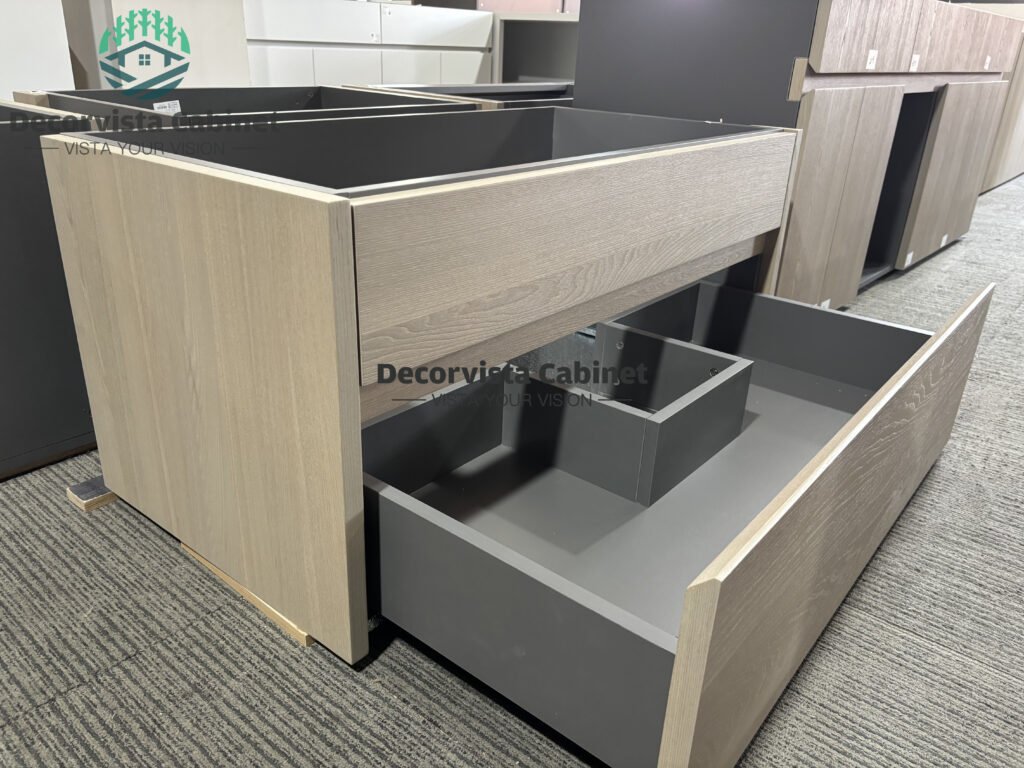
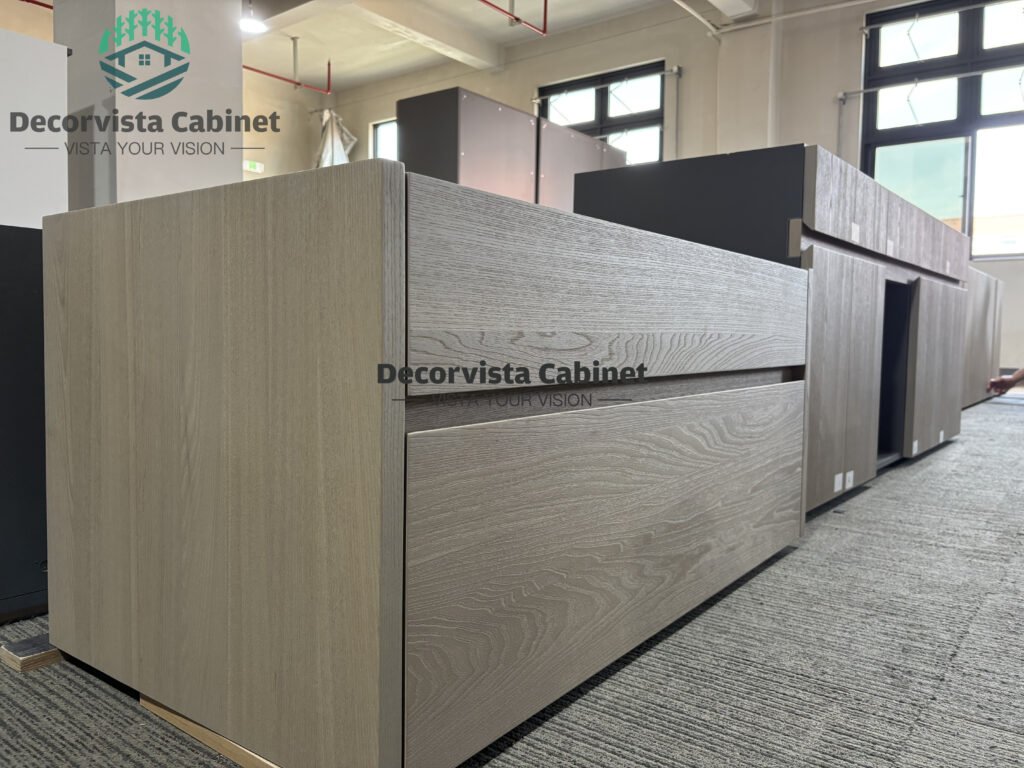
Decorvista incorporates traditional mortise-and-tenon joinery and high-frequency edge-gluing for door frames, load-bearing cabinet carcasses, and structural stress points. For complex curved shapes and custom architectural elements, 5-axis CNC equipment handles high-precision milling—balancing structural integrity, dimensional precision, and artistic presentation.
04 | Deep IDWC (Integrated Door-Wall-Cabinet) Systems
Decorvista focuses on eliminating visual friction in interior spaces by coordinating:
Matching Wood Species + Matching Finish + Matching Color + Continuous Grain Flow + Unified Trim Details
Whether detailing classical moldings for French-inspired interiors, subtle joinery for New Chinese aesthetics, or frameless concealed doors for modern minimalism, Decorvista achieves effortless harmony across doors, wall panels, cabinetry, baseboards, and lighting reveals.
05 | Professional Shop Drawings & Detailing
As a dedicated millwork partner for architects and designers, Decorvista maintains an experienced engineering detailing team. They proactively coordinate with site conditions—including structural walls, HVAC, low-voltage wiring, stone interfaces, and lighting channels—translating design renderings into technical shop drawings complete with section details, interface reveals, and hardware prep guides.
06 | 1:1 Factory Pre-Assembly & Quality Assurance
To eliminate costly jobsite re-work, Decorvista adheres to the principle of “resolving all fit issues before shipment”:
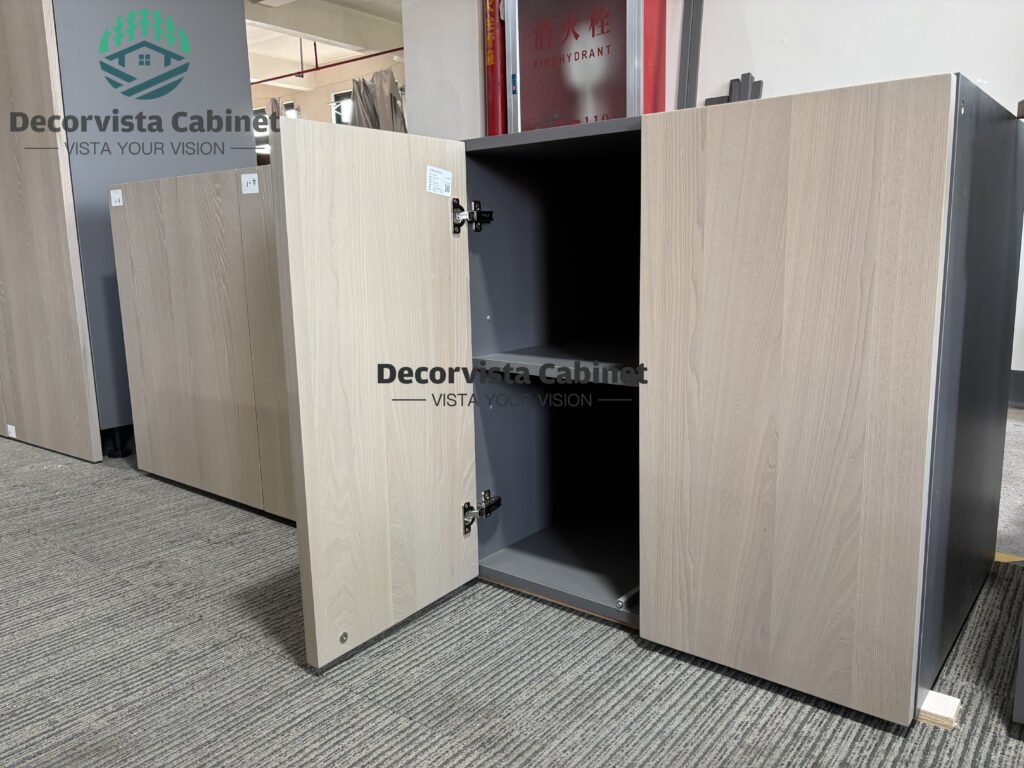
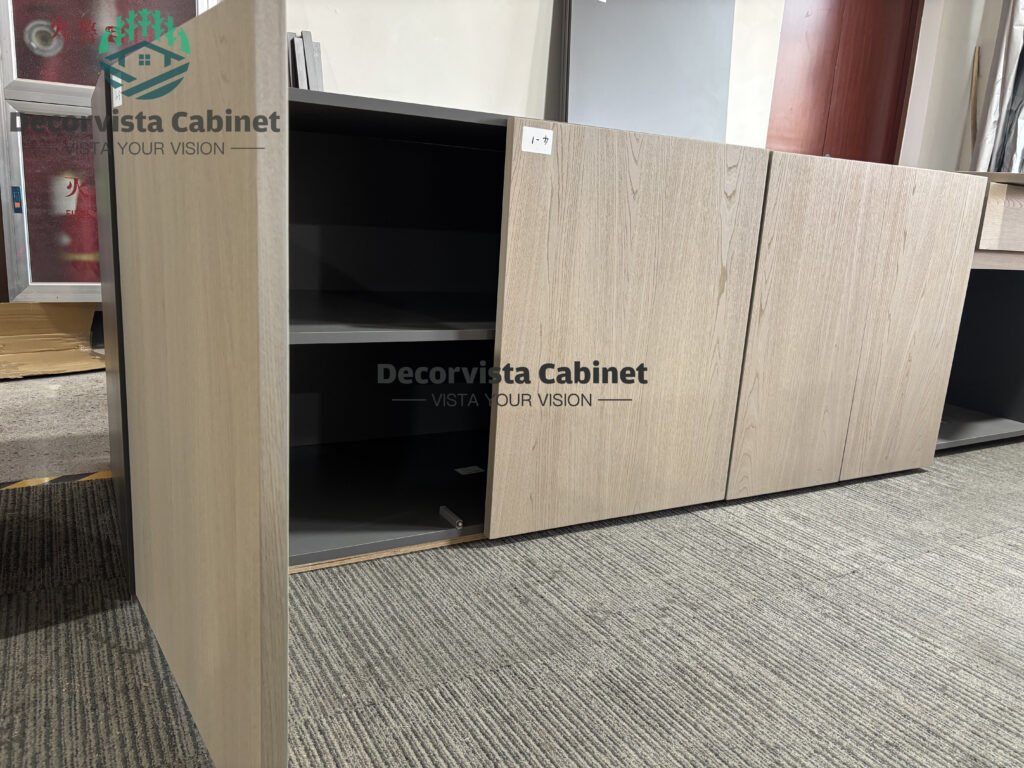
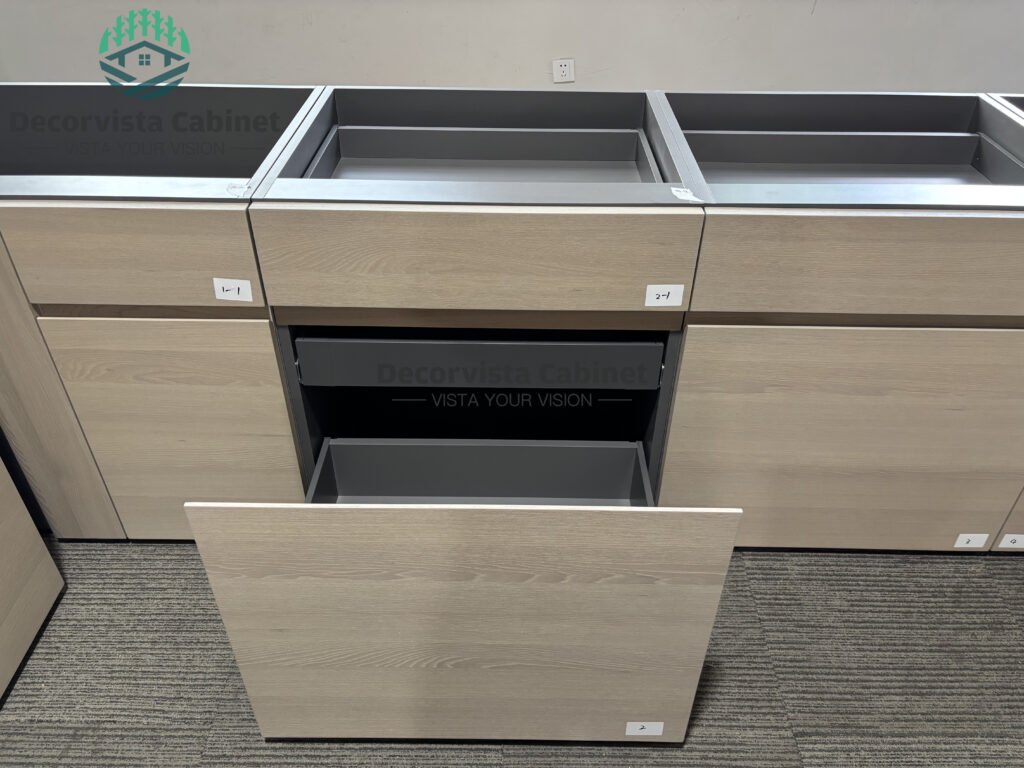
Factory Pre-Assembly: Complex door-wall-cabinet assemblies undergo 1:1 structural dry-fitting prior to packing;
Comprehensive Inspections: Thorough checks for dimensions, reveals, grain matching, hardware operation, and finish consistency;
Systematic Labeling: Every component is labeled according to shop drawing references and securely packed for transport;
On-Site Technical Support: Providing precise technical handovers and site installation guidance to ensure the final installation faithfully mirrors the approved design.
4. Procurement & Selection Guide: Evaluating a Millwork Supplier
When selecting a whole-house custom millwork manufacturer, project teams and homeowners should follow a structured evaluation workflow: [Define Project Requirements] ──> [Inspect Factory & Kilns] ──> [Review Joinery Details] ──> [Engage in Shop Drawing Review]
Define Technical Standards Before Evaluating Price: Avoid judging high-end custom millwork solely on a “per-square-foot” average. Grade of lumber, moisture control standards, finish schedules, hardware specifications, and geometric complexity directly determine overall costs.
Look Beyond the Showroom—Inspect the Factory: Verify whether the manufacturer operates dedicated lumber drying/conditioning rooms, six-sided CNC boring machinery, PUR/laser edge-banders, and dust-free finishing rooms.
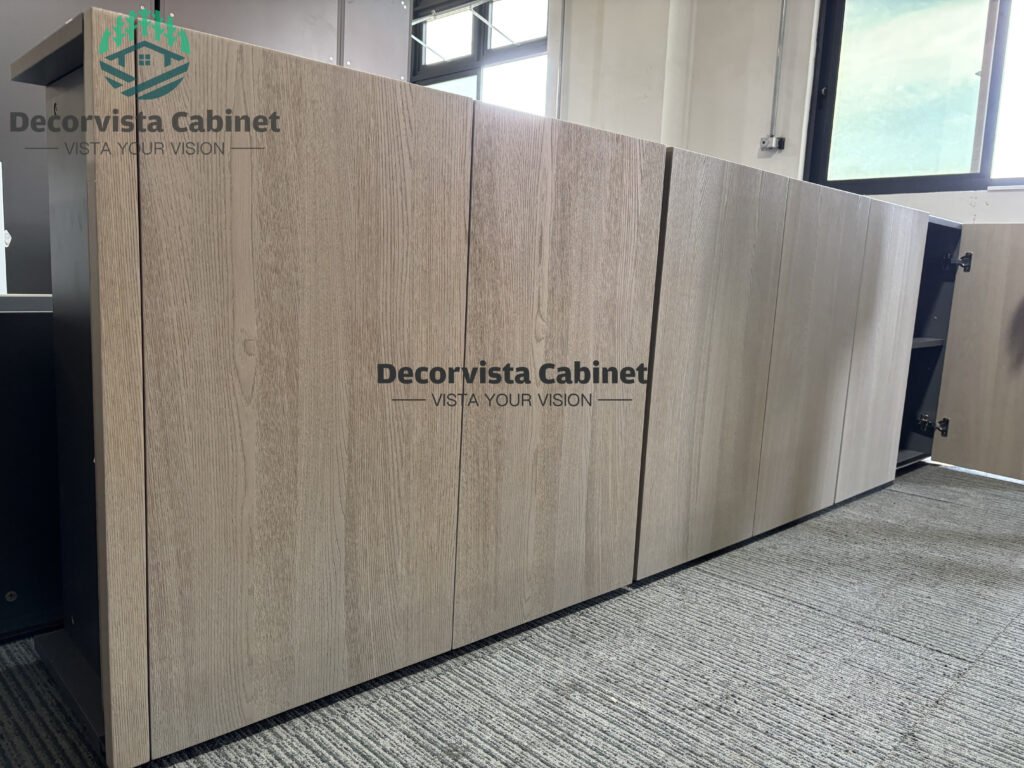
Examine “Reveals and Interface” Details: Inspect sample assemblies for reveal consistency, corner joinery, wood grain continuity, concealed hinge precision, and finish clarity.
Standardize Contracts with Explicit Specifications: Ensure contracts explicitly list botanical wood species names, core substrate types, environmental standards (e.g., ENF grade), finish schedules, hardware brand/models, acceptable color variation tolerances, lead times, and warranty terms.
5. Frequently Asked Questions (FAQ)
Q1: What is a realistic lead time for a whole-house custom millwork project?
A: Custom architectural millwork requires extensive conditioning, precision cutting, CNC machining, assembly, multi-stage sanding/coating, and factory pre-assembly. For luxury villas and penthouses, typical lead times range from 45 to 90 days from the date of final shop drawing and sample approval. It is strongly recommended to engage the millwork team during early drywall/rough-in phases.
Q2: Is solid lumber always superior to engineered wood composites or veneers?
A: Not necessarily; each serves a specific purpose:
Solid Lumber: Offers unmatched natural tactile warmth, depth, and material value—ideal for traditional aesthetics, high-touch architectural features, heavy wall panels, main entry doors, and handrails.
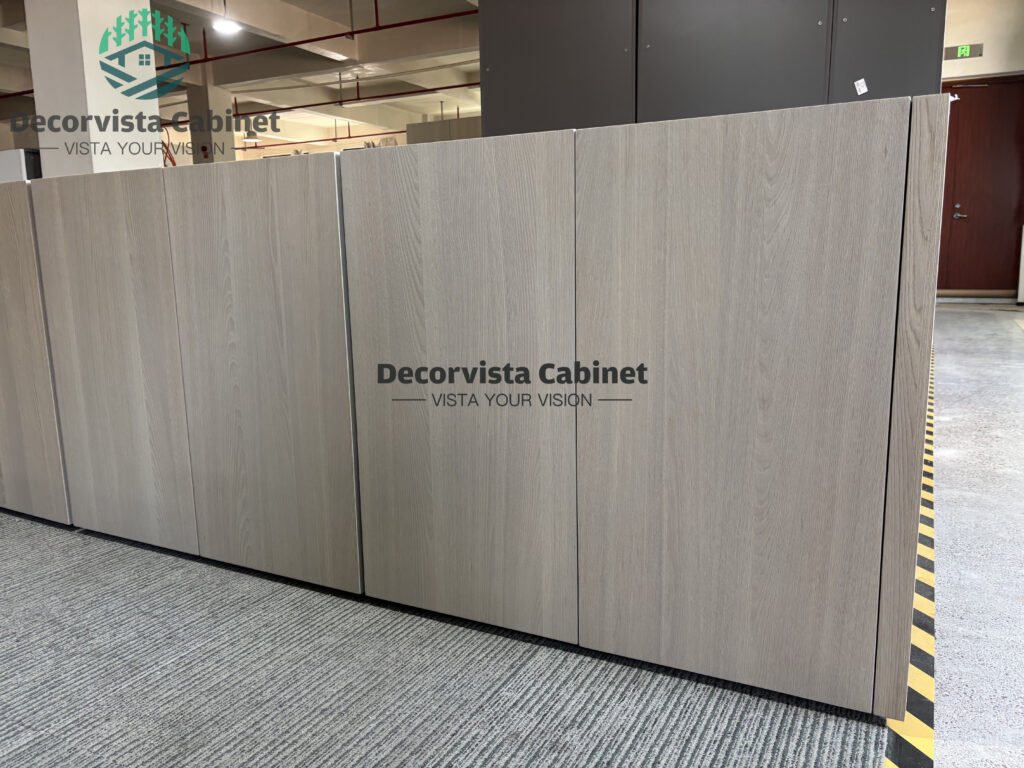
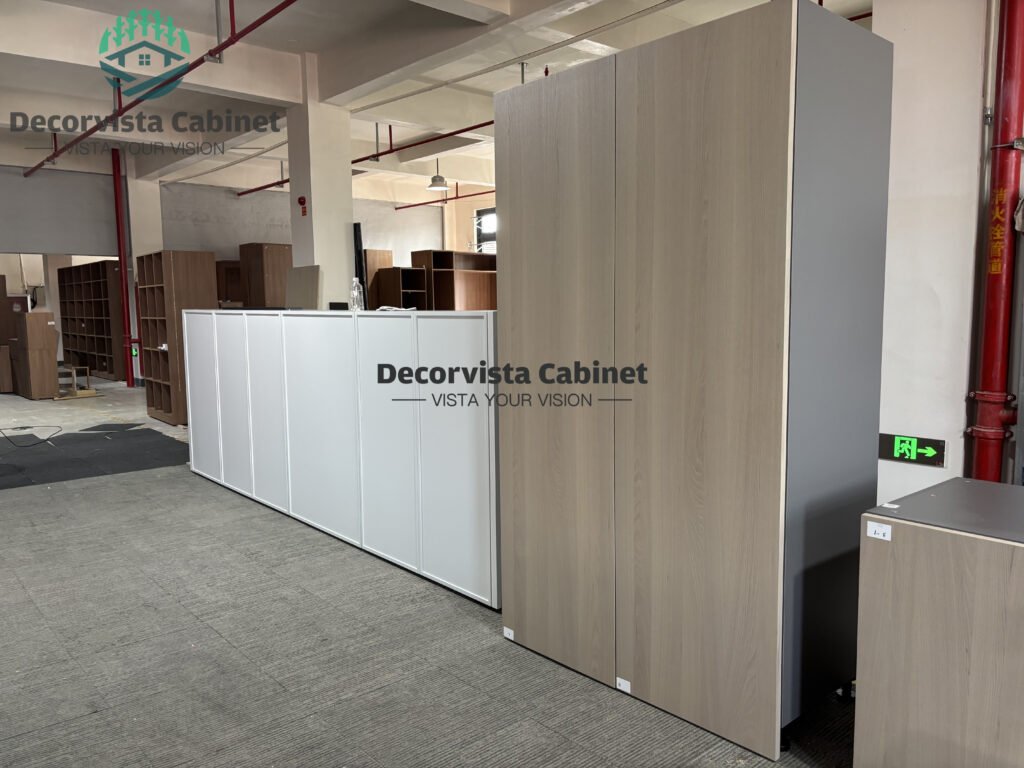
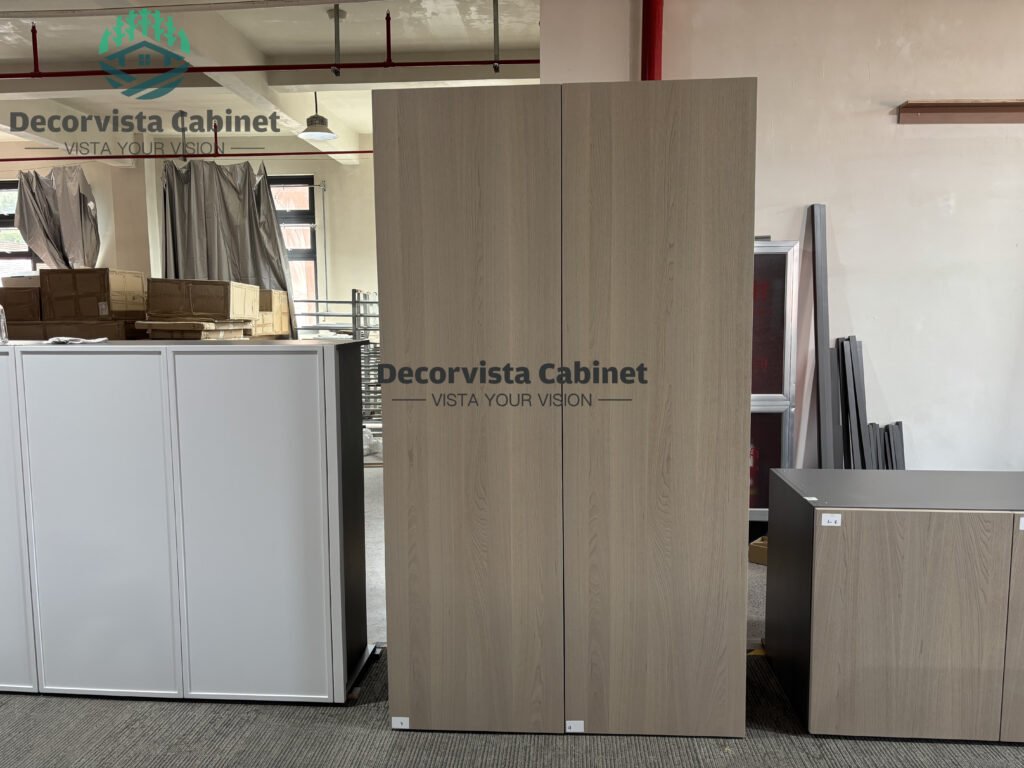
Engineered Composites & Premium Veneers: Provide superior dimensional stability with minimal expansion/contraction, making them ideal for modern minimalist ultra-tall cabinet doors, concealed doors, and expansive wall paneling. Decorvista provides tailored material specifications that balance aesthetic vision, stability, and budget.
Q3: Why should IDWC integration be planned early in the design process?
A: IDWC systems involve complex structural interface details and concealed hardware pre-sets. Early coordination allows seamless integration with MEP rough-ins, ceiling drops, flooring transitions, and wall alignment, preventing costly field modifications or awkward filler strips during final installation.
Conclusion: Harmonizing Design, Materials, and Architectural Space
Luxury custom millwork is far more than processing lumber—it is an intricate discipline of architectural engineering.
Hangzhou Decorvista Building Materials Co., Ltd. (Decorvista) remains dedicated to the philosophy of “Authentic Materials, Precision Craftsmanship.” Leveraging Nanxun’s premier wood manufacturing ecosystem, Decorvista combines rigorous material science, Industry 4.0 manufacturing, professional shop drawing detailing, and factory pre-assembly to serve as a trusted architectural millwork partner for luxury homeowners, architects, designers, and developers worldwide.
Architects, interior designers, property developers, and project teams are invited to contact us or visit Decorvista’s manufacturing facility in Nanxun, Huzhou, Zhejiang to review capabilities and discuss upcoming projects.