
As a professional whole-house cabinetry design and customisation company, we deeply understand that kitchen cabinet dimension planning is the core element determining the kitchen’s functionality, comfort, and aesthetics. A scientifically planned cabinet layout not only makes the cooking process more efficient but also enhances the overall value of the home.
Combining industry standards and practical design experience, we have compiled the following key kitchen cabinet dimension planning essentials for you—whether you are an architect/designer planning a home or an owner building a custom home.
The total area of the kitchen is the foundation for determining the number of cabinets and the layout. First, establish the approximate kitchen size based on the type of home and usage requirements:
Kitchen Type | Ideal Dimensions (Square Meters / Square Feet) | Applicable Scenarios |
Small/Compact | 7 – 10 m² / 75 – 110 ft² | Studios, small apartments, focusing on simplicity and practicality. |
Standard | 12 – 16 m² / 130 – 170 ft² | Most family homes, meeting daily cooking and storage needs. |
Large/Open-Plan | 18 – 25+ m² / 195 – 270+ ft² | Luxury homes, open-plan design, suitable for multiple cooks, socialising, and dining. |
All cabinet layouts should be optimised around the Work Triangle (sink, stove, refrigerator) to ensure maximum working efficiency.
Total Work Triangle Length: Should not exceed 26 feet (approx. 7.9 meters).
Single Leg Length: Should range between 4 to 9 feet (approx. 1.2 to 2.7 meters).
Design Principle: Cabinet placement must ensure the shortest, unobstructed path of movement between these three points.
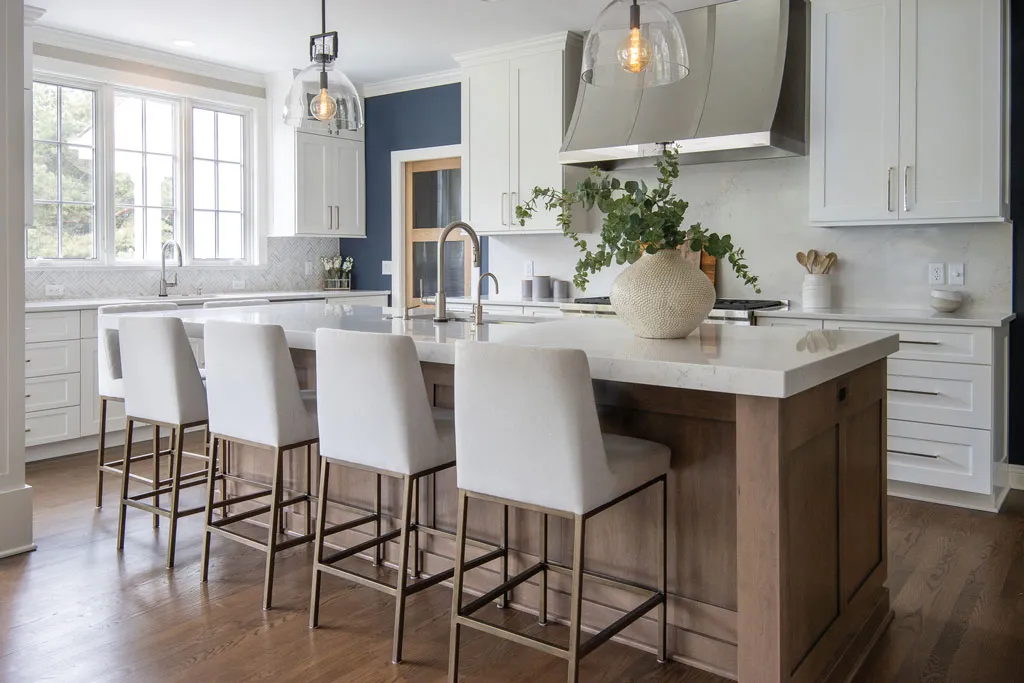
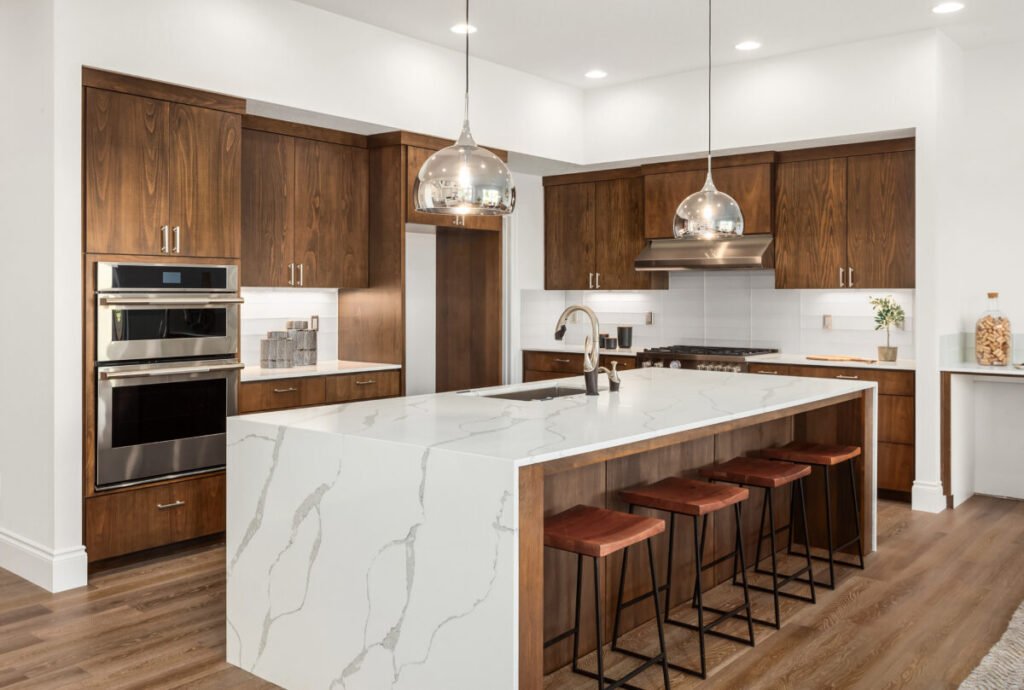
The layout directly affects usable counter and storage space.
|
Layout Type |
Minimum Applicable Size |
Storage/Counter Feature |
Core Advantage |
|
One-wall |
5 – 7 m² |
Limited storage and counter space. |
Suitable for minimal space, saves floor area. |
|
L-Shape |
10 – 12 m² |
Good corner utilisation, ample counter space. |
Flexible, easily creates an efficient work triangle. |
|
U-Shape |
12 – 15 m² |
Maximises storage and counter space (three walls). |
Suitable for multiple cooks, compact work triangle. |
|
With Island |
18 – 25+ m² |
Island provides extra work area, storage, and social hub. |
Enhanced functionality, is the kitchen’s focal point. |
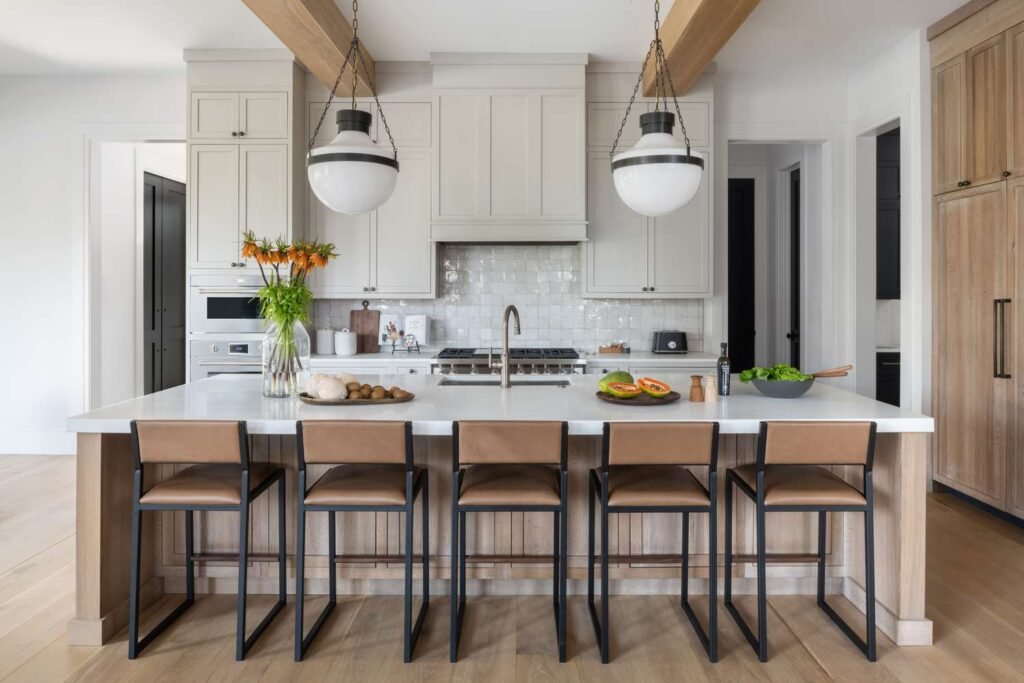
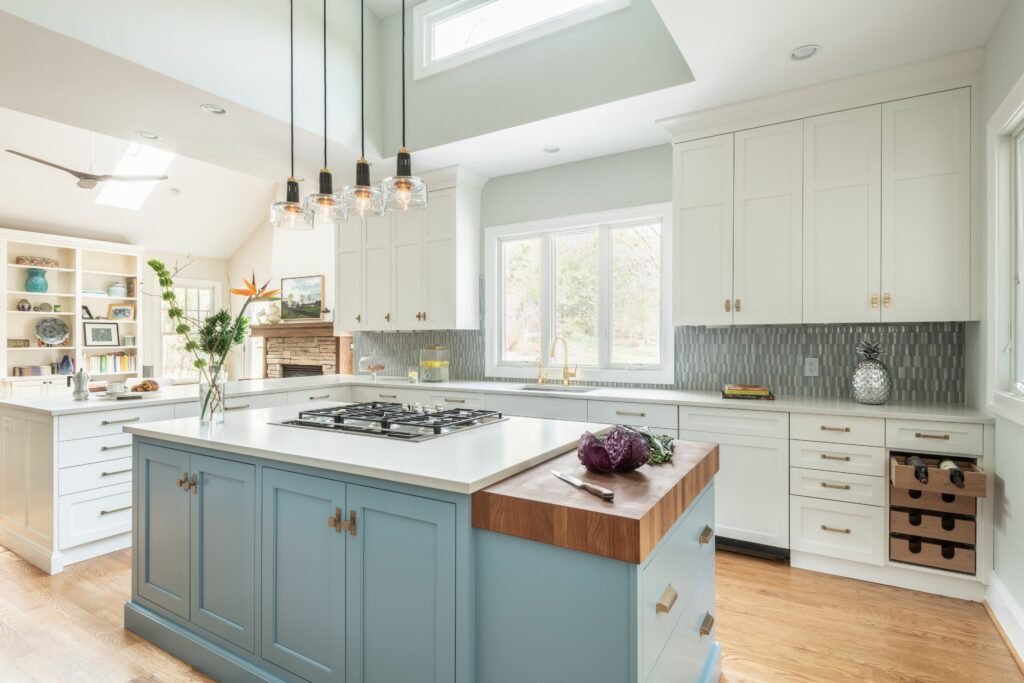
To ensure comfort and safety, strictly adhere to the following critical cabinet and counter dimension standards:
|
Cabinet Type |
Height (Feet/Inches) |
Depth (Feet/Inches) |
|
Base Cabinet |
34 – 36 inches (Flush with countertop) |
24 inches (approx. 61 cm) |
|
Wall Cabinet |
30 – 42 inches (Depends on ceiling height) |
12 – 15 inches (approx. 30 – 38 cm) |
|
Countertop Height |
36 inches (approx. 91 cm) |
Ensures comfortable standing for operation and prevents fatigue from bending. |
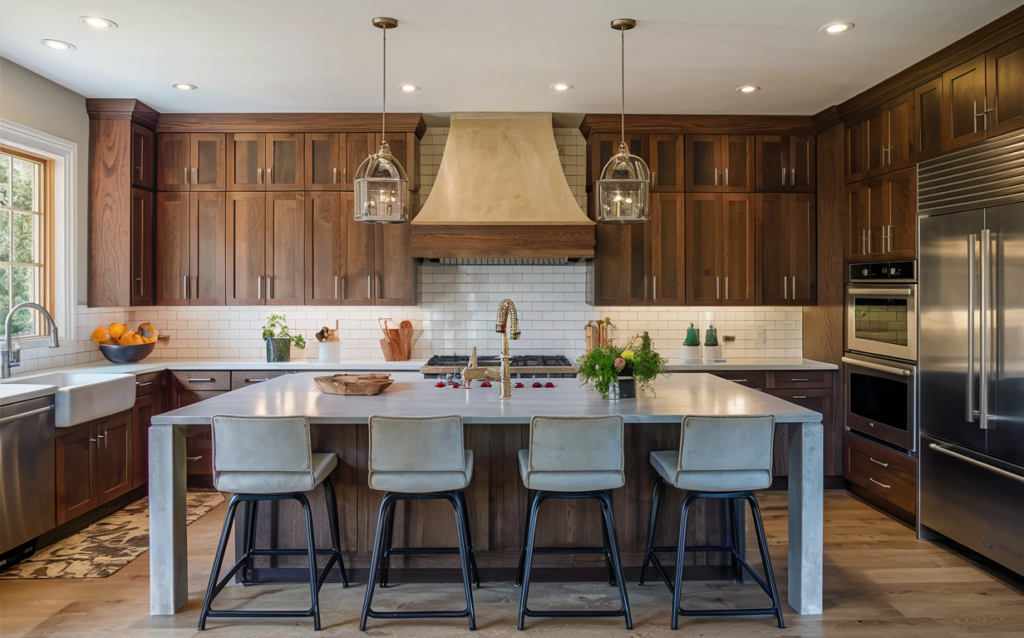
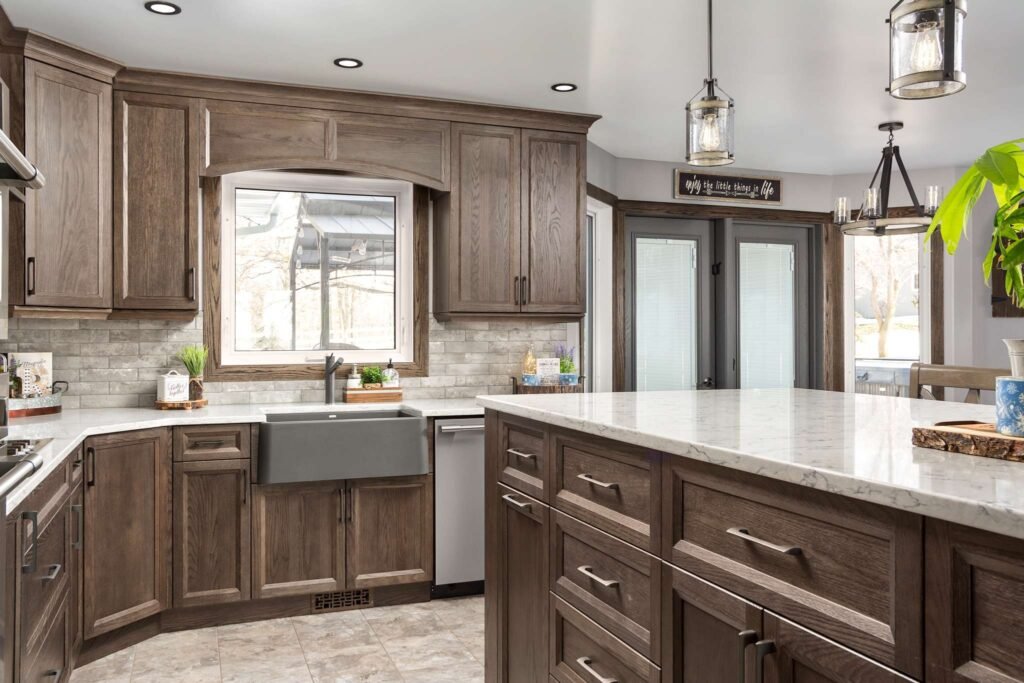
Purpose: Provides foot space, allowing closer standing to the counter, easing fatigue during long prep sessions.
While cabinet quantity varies, use the following as a design starting point:
Household Size Guidance: Approximately 2 cabinets per adult and 1 cabinet per child’s storage volume.
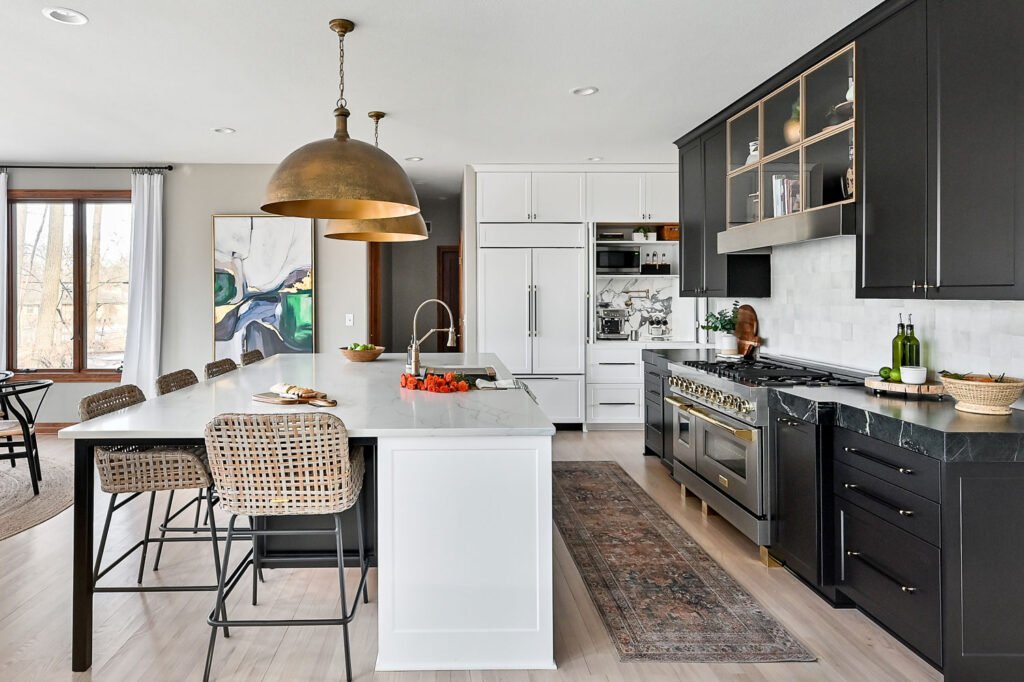
Ensuring smooth kitchen “traffic flow” and user safety is paramount in design.
|
Passage Location |
Minimum Width (Inches / cm) |
Purpose |
|
Work Zone Aisle |
42 inches / 107 cm |
For single cook or primary working area. |
|
Island/Opposite Counter Aisle |
40 – 48 inches / 100 – 120 cm |
Ideal Width. Ensures multiple people can move simultaneously, and appliances (dishwasher/oven) can be opened without obstruction. |
|
Non-Work Zone Aisle |
36 inches / 91 cm |
Secondary passage for through-traffic. |
|
Appliance Door Clearance |
Minimum 40 inches / 100 cm |
Ensures enough space to stand/load/unload after the oven or dishwasher door is opened. |
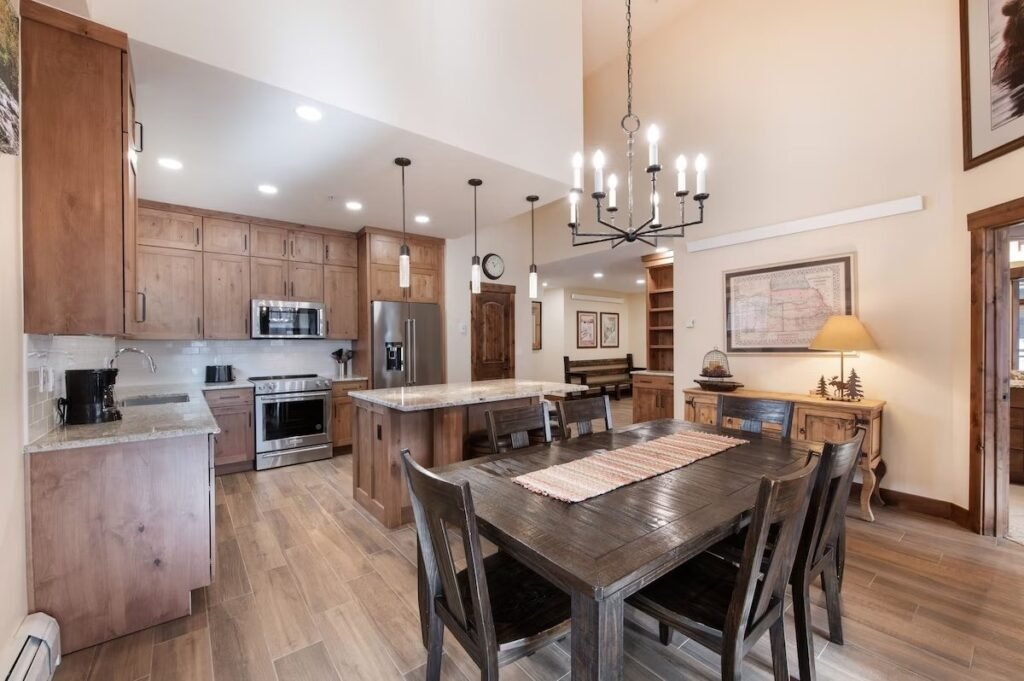
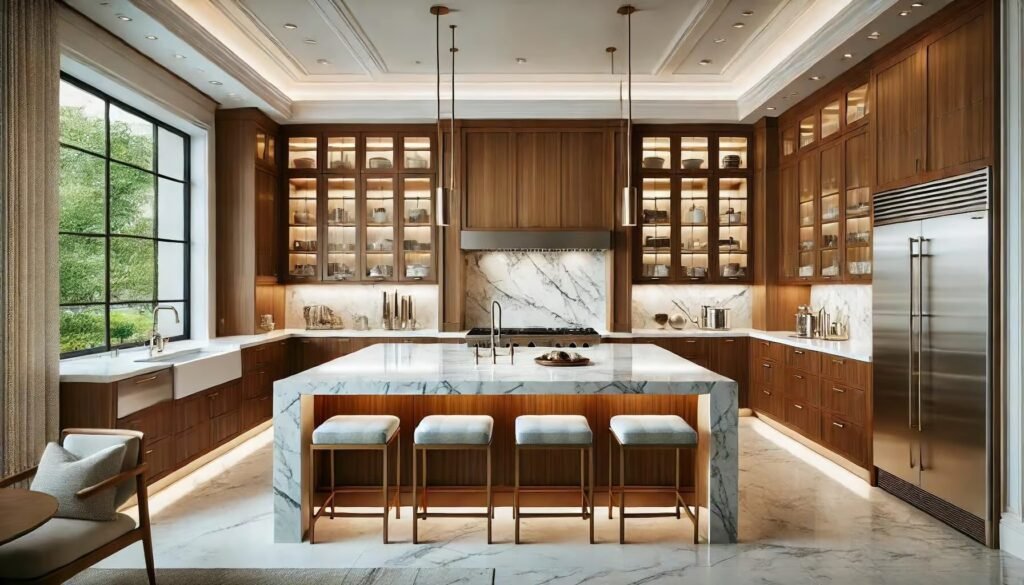
Every major work area needs adjacent counter space to place items—this is critical for safety and efficiency.
|
Appliance |
Minimum Counter Space (Inches / cm) |
Suggested Location |
|
Next to Sink/Dishwasher |
15 – 24 inches / 38 – 61 cm |
For setting down dirty/clean dishes. Need min 24 in next to dishwasher. |
|
Next to Stove/Oven |
15 inches / 38 cm |
For resting hot pans or prepared ingredients. |
|
Next to Refrigerator |
15 inches / 38 cm |
On the handle (opening) side, for items being taken out or put in. |
Above Electric Cooktop: 24 – 30 inches (approx. 61 – 76 cm).
Above Gas Cooktop: 30 – 36 inches (approx. 76 – 91 cm).
Crucial Tip: The hood should be wider than the cooktop (e.g., 36-inch cooktop with a 42-inch hood) for optimal ventilation.
Inventory Check: Before design starts, inventory all appliances (large and small), pots, and dishware to prevent storage shortages after completion.
Storage Optimisation: Use deep drawers instead of traditional base cabinet doors wherever possible, and utilise vertical space (cabinets up to the ceiling).
Appliance Storage: Plan an Appliance Garage with built-in sockets to hide everyday small appliances, keeping countertops clutter-free.
Accessibility Design: Ensure all critical aisles meet 42 inches, especially if family members have special needs.
Personal Customisation: Allow slight adjustments to counter height in non-critical areas (like a baking station or breakfast bar) to suit user height for enhanced ergonomic comfort.
By following these detailed dimension and planning guidelines, both designers planning for clients and owners customising their homes can ensure their kitchen cabinetry design balances functionality, safety, and aesthetics, truly making the kitchen the “heart” of the home.
#KitchenDesignDimensions#CabinetPlanningGuide#StandardKitchenMeasurements#KitchenWorkTriangle#ErgonomicsinKitchenDesign#KitchenIslandClearance#CabinetDepthandHeight#CustomKitchenCabinets#KitchenRenovationChecklist#ToeKickDimensions
Hangzhou DecorVista Cabinet
86-158-6813-1904
decorvistacabinet@gmail.com
Floor 2, Block 3,No.589 Shixiang Road, Gongshu district, Hangzhou City, Zhejiang Province, China