How to Evaluate Whether a Millwork Factory Truly Has“Architectural-Grade Integrated Door, Wall & Cabinetry Capability”
By Decorvista Cabinet 12/012026
In the construction of high-end residences, custom villas, and boutique commercial spaces, more and more builders, developers, and designers are realizing a critical truth:
The real problem is not whether the millwork looks good, but whether it delivers architectural-grade certainty.
Rework, on-site coordination issues, dimensional deviations, uncontrolled joints, inconsistent finishes— these issues are often not caused by poor workmanship, but by the fact that the millwork system itself does not meet architectural-grade standards.
So how can builders determine whether a millwork factory truly possesses architectural-grade integrated door, wall, and cabinetry capability?
This article breaks it down systematically from four dimensions: design, manufacturing, project management, and system-level service.
1. What Is “Architectural-Grade Integrated Door, Wall & Cabinetry”?
When searching for “integrated door wall cabinetry,” many results will say: doors, wall panels, and cabinets can be made in the same color or material.
In an architectural context, this is far from sufficient.
True architectural-grade integration means:
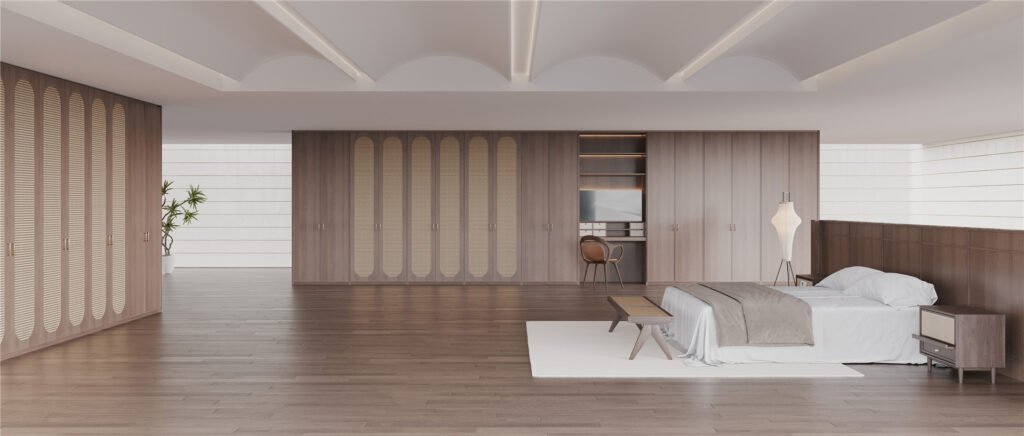
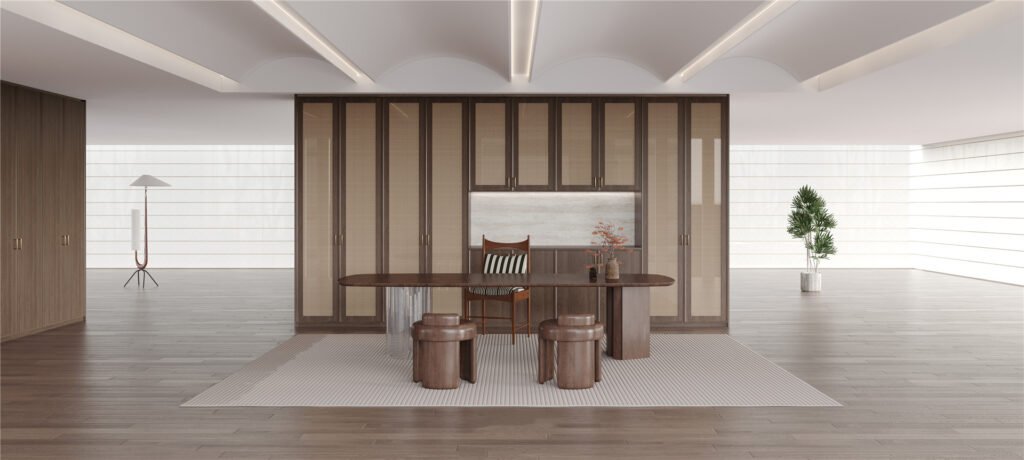
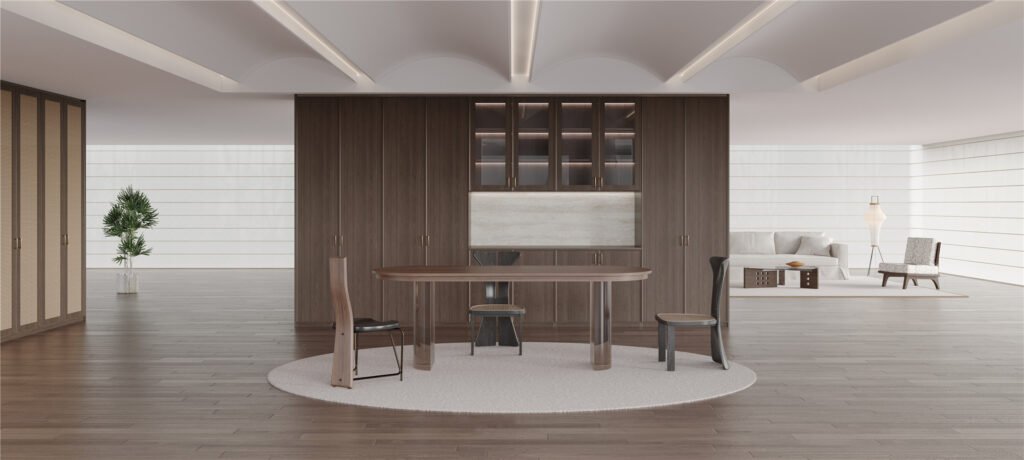
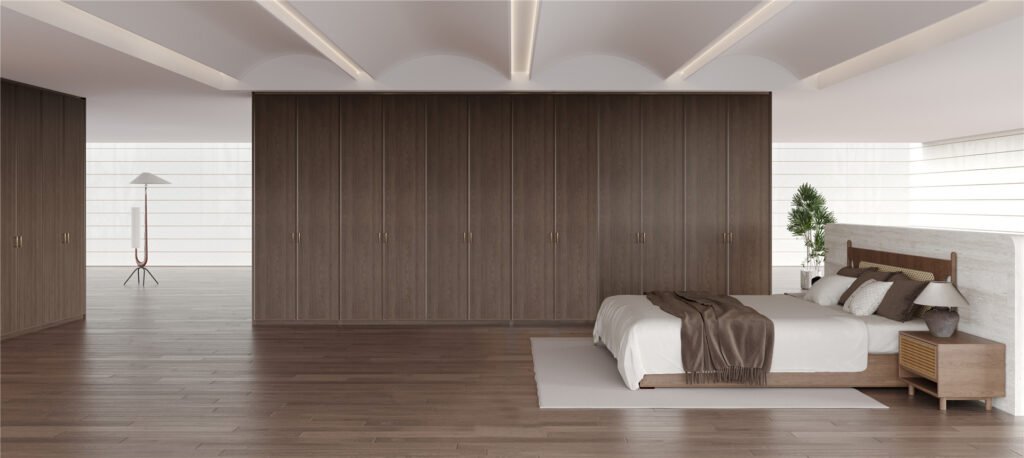
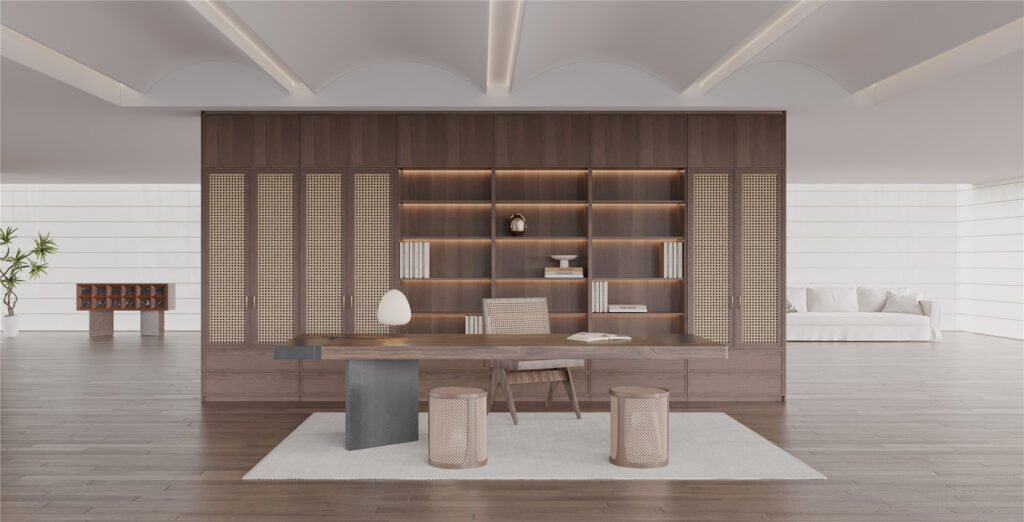
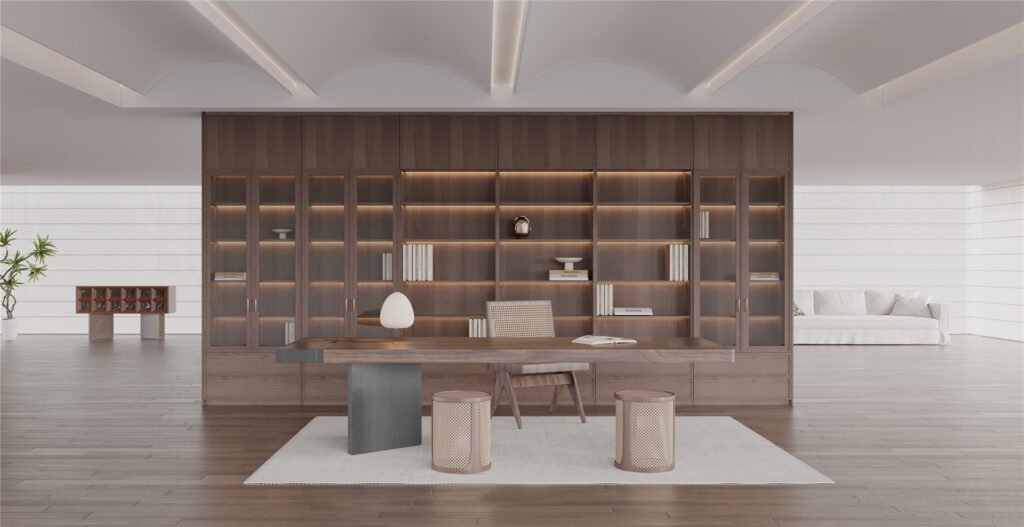
Treating door systems, wall panel systems, and cabinetry systems as part of the building’s interior architectural system, designed, manufactured, and delivered as a whole— not assembled later as separate furniture products.
The core differences are whether the system:
Is driven by architectural logic, not product logic
Includes fault-tolerant system design, not a “zero-error assumption”
Provides builders with a complete, controllable project delivery loop
2. Four Core Dimensions for Evaluating Architectural-Grade Capability
1️⃣ Design Development Capability:
Does the Factory Have an Architecturally-Minded Design Team?
An architectural-grade millwork design team solves building problems, not just aesthetic ones.
Key evaluation points:
Can the team read and further develop:
Architectural floor plans
Elevations
Sections
Structural and detail drawings
Do they consider, during the design phase:
Wall thickness
Finished floor levels (FFL)
Ceiling heights
Door opening proportions
The system relationship between baseboards and wall panels
Do they deliver:
Detail drawings
Joint and termination solutions
Integrated layout drawings rather than isolated product drawings
If a factory only provides product drawings but no architectural detailing logic, it is generally not architectural-grade.
2️⃣ System Integration Capability:
Do Doors, Walls, and Cabinets Truly Share One System?
“Integrated door-wall-cabinetry” is a high-frequency SEO term, but real integration requires:
A unified design language
A unified modular system
A unified material and process system
Architectural-grade factories typically maintain complete systems for:
Door systems
Wall panel systems
Cabinetry systems
And ensure consistency across:
Color
Sheen level
Linear proportions
Joint and termination methods
Further technical evaluation points include:
Use of BIM or advanced 3D modeling for holistic coordination
Clash detection between MEP systems, equipment, and millwork
Direct data transfer from design to CNC manufacturing (Design → Manufacturing)
“Design equals manufacturing” is a key hallmark of architectural-grade millwork systems.
3️⃣ Manufacturing Capability:
Does the Factory Meet Architectural-Grade Precision Standards?
This is the key dividing line between furniture factories and architectural millwork factories.
Support for measurements during rough or base construction stages
Use of laser scanning or total station surveying
Installation teams that are factory-trained and in-house
Ability to coordinate with general contractors, MEP, and fire systems
Dedicated personnel for site coordination and issue resolution
Most large-scale rework originates from a lack of system delivery capability.
3. Practical Factory Evaluation Checklist for Builders
✔ On-Site Factory Visit (Strongly Recommended)
Focus on the production floor, not the showroom
Observe active orders:
Are they scattered furniture parts?
Or clearly labeled, systemized project components?
Review joint and termination sample walls
✔ Project Case Review
Not just renderings—require:
Construction site photos
Installation process documentation
Detail close-ups
Shop drawings (sections and details)
✔ “Stress-Test” Questions
Examples:
How does your system absorb a 30 mm wall vertical deviation?
How do you achieve seamless integration on curved walls?
How do you handle on-site changes, timelines, and cost control?
4. Final Decision Standard:
System Integrator or Product Supplier?
Factories with architectural-grade integrated door-wall-cabinetry capability function more like:
Interior architectural system integrators
Rather than:
Isolated wood product manufacturers
The ultimate evaluation criterion is simple:
Is the factory willing—and capable—of sharing responsibility with the builder for the project’s final visual outcome and functional quality?
If the answer is Yes, on-site coordination costs and construction risk drop dramatically.
Why More Builders Are Choosing Architectural-Grade Millwork Systems
In high-end projects, risk control matters more than material selection.
The essence of architectural-grade capability is not:
how many products a factory can make,
how much uncertainty it can remove from the construction process.
If you are sourcing millwork for luxury residences, custom villas, or full-building projects, system capability should always take priority over unit pricing.
#Architectural-GradeIntegratedDoorWallCabinetry#High-EndCustomMillwork Factory#MillworkSupplierforBuilders#IntegratedDoorWallCabinetry Systems#ArchitecturalMillworkSystems#VillaIntegratedDoorWallCabinetry#CustomResidentialMillworkSolutions #Architectural-GradeIntegratedDoorWallCabinetry #High-EndCustomMillwork #ArchitecturalMillwork Systems #IntegratedDoorWallCabinetFactory#MillworkSupplierSelectionforBuilders