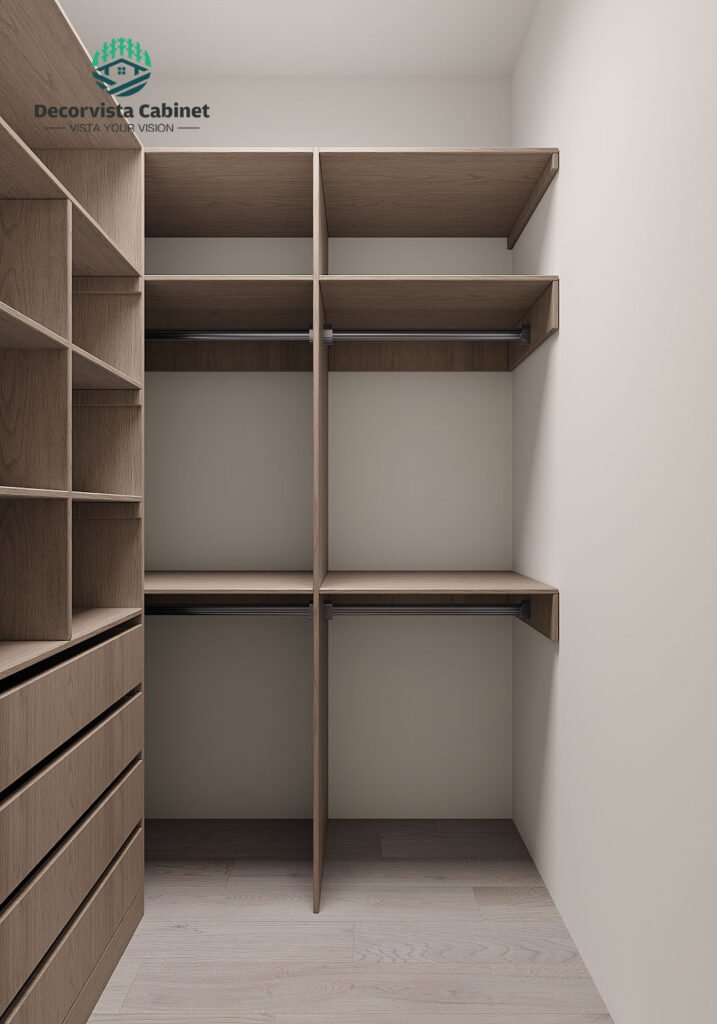
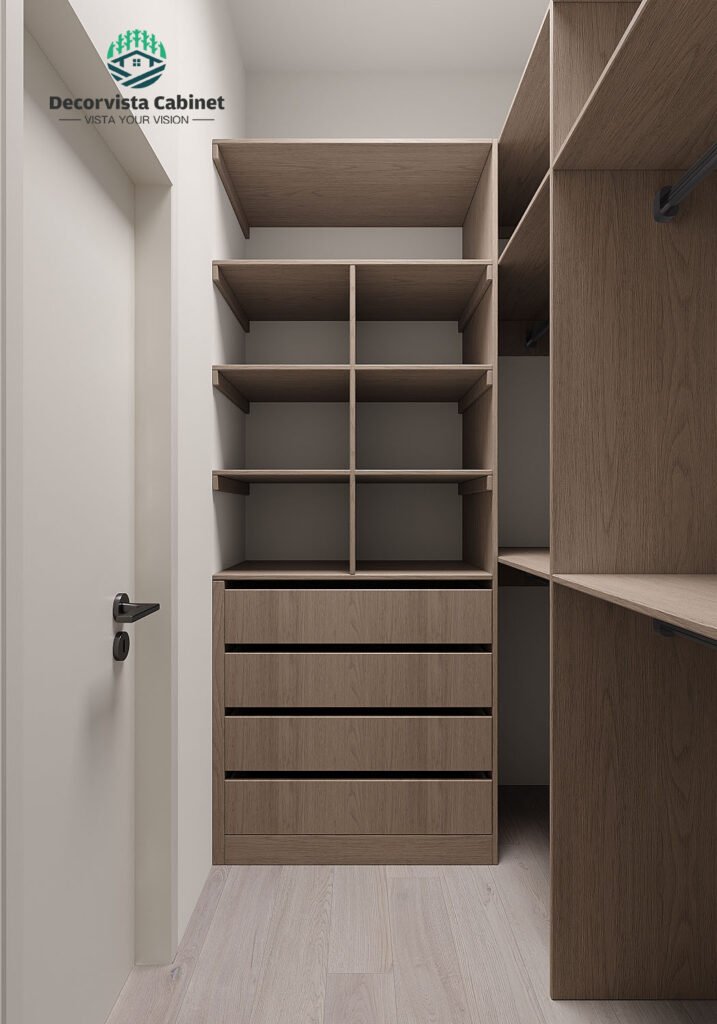
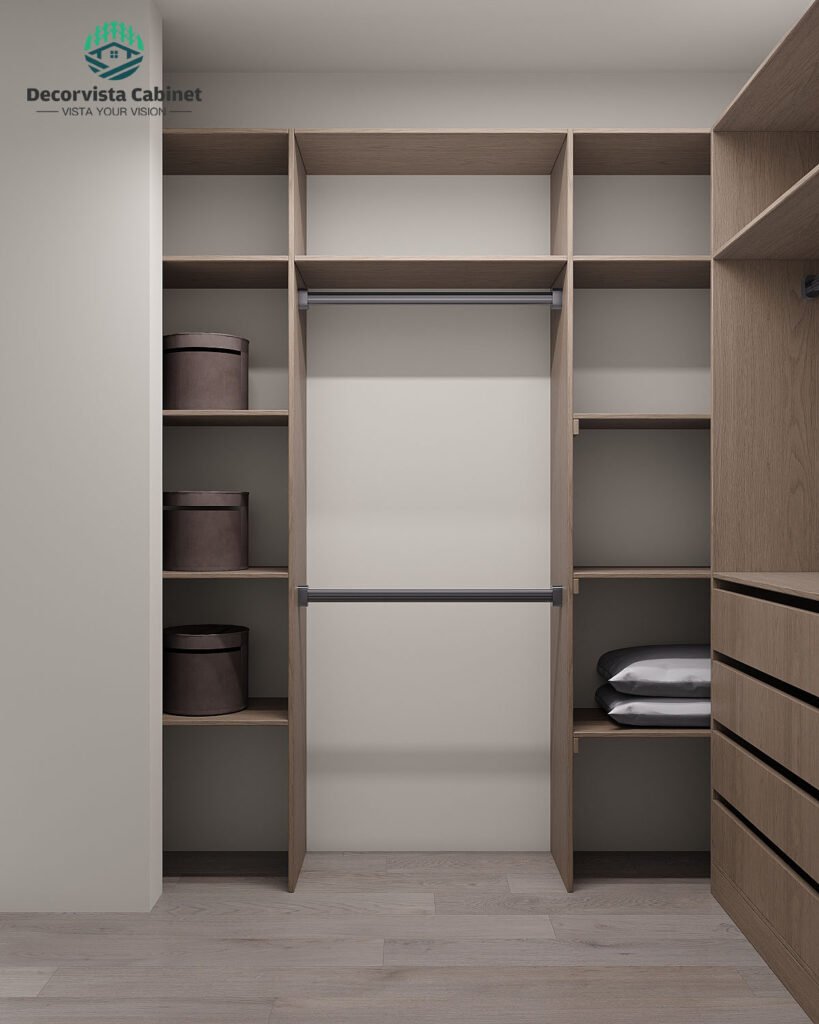
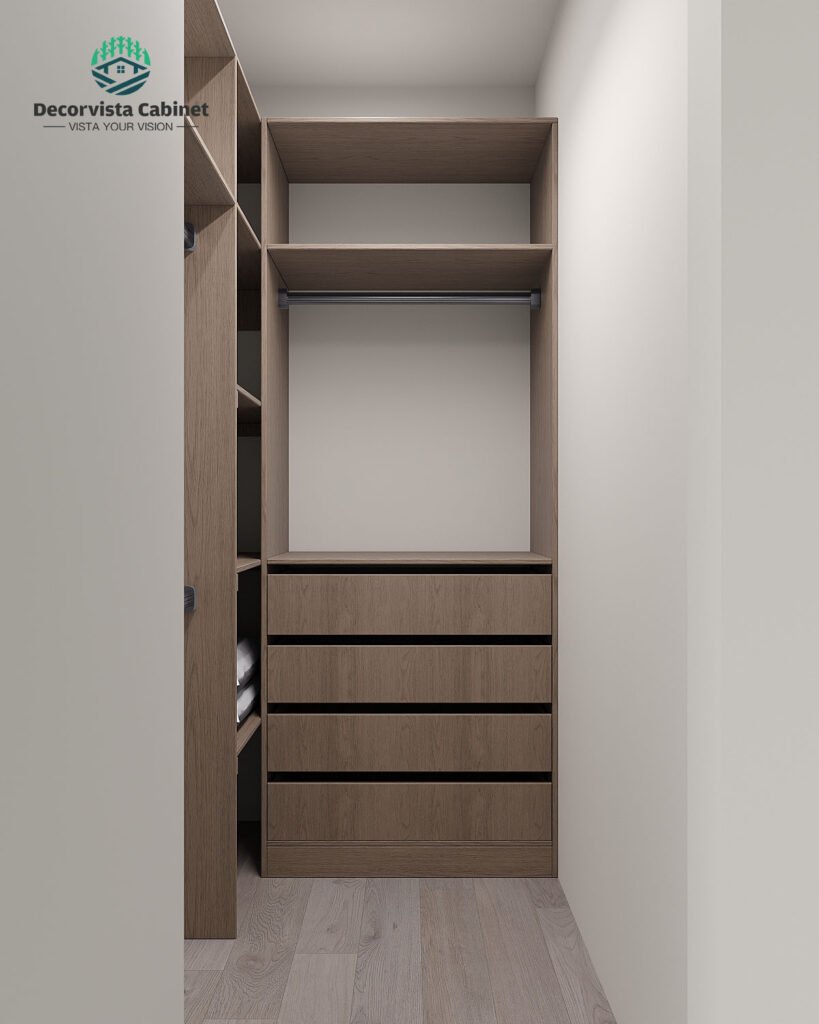
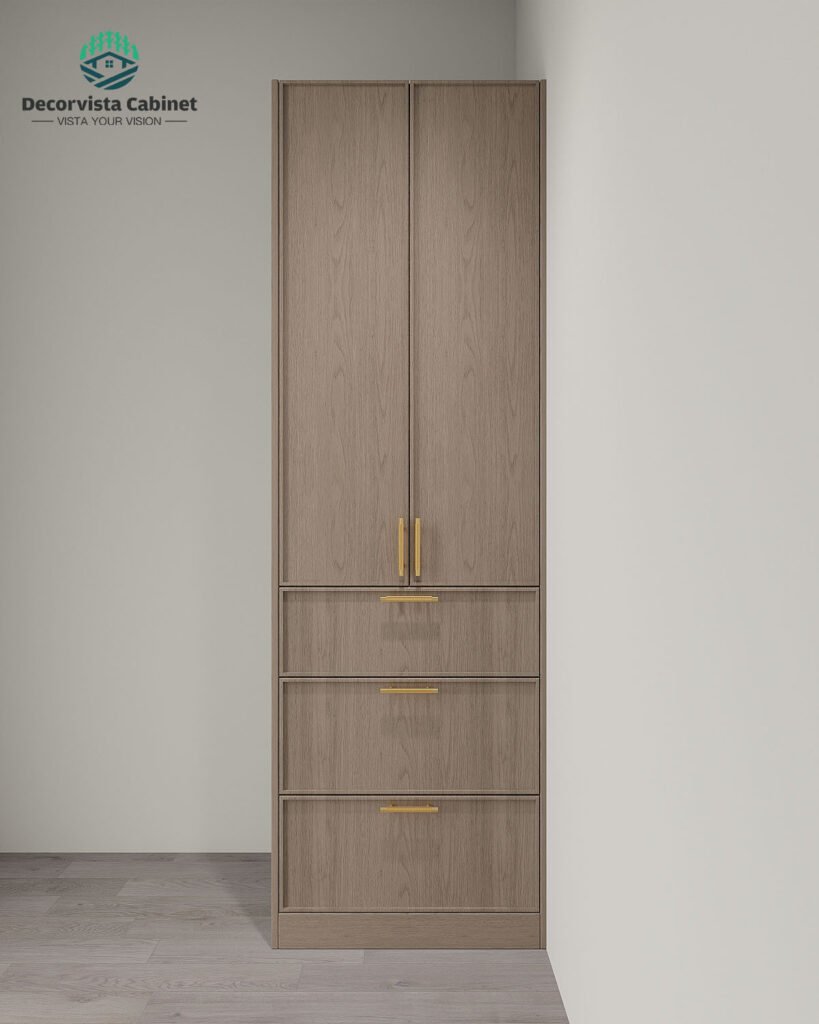
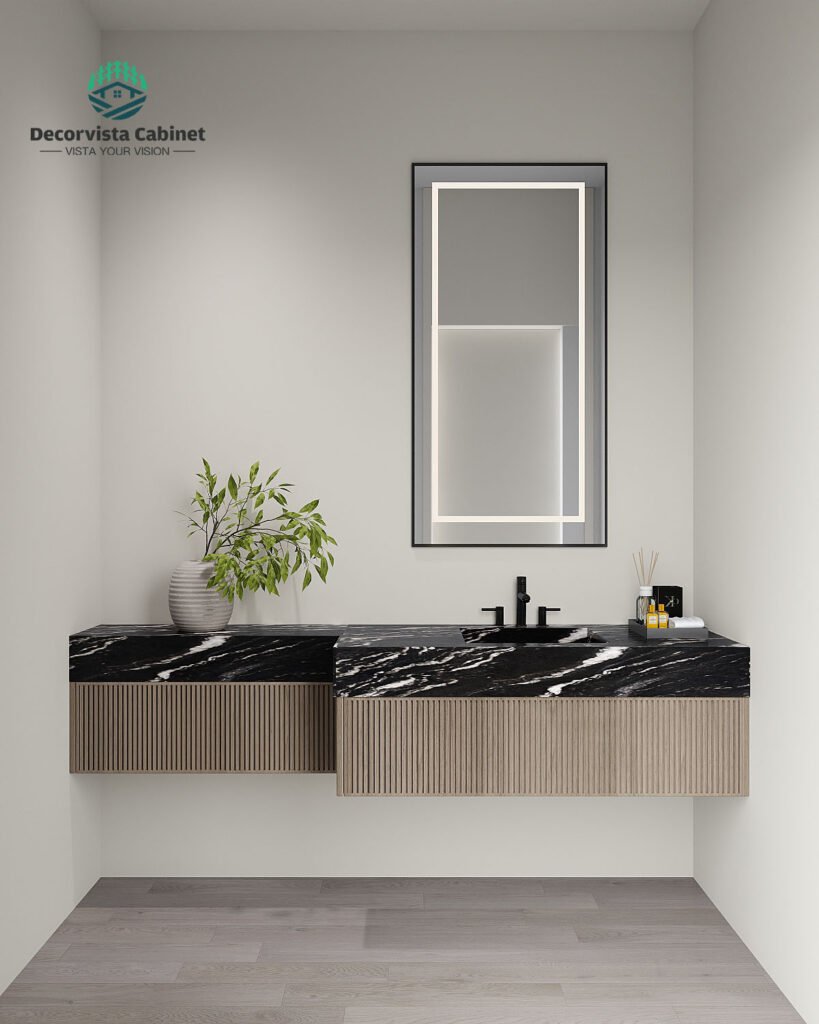
In luxury villas and high-end whole-house customization projects, construction sequence is never a matter of habit—it is a technical decision that directly determines the lifespan, stability, and perceived quality of the space.
One of the most underestimated yet most failure-prone questions is:
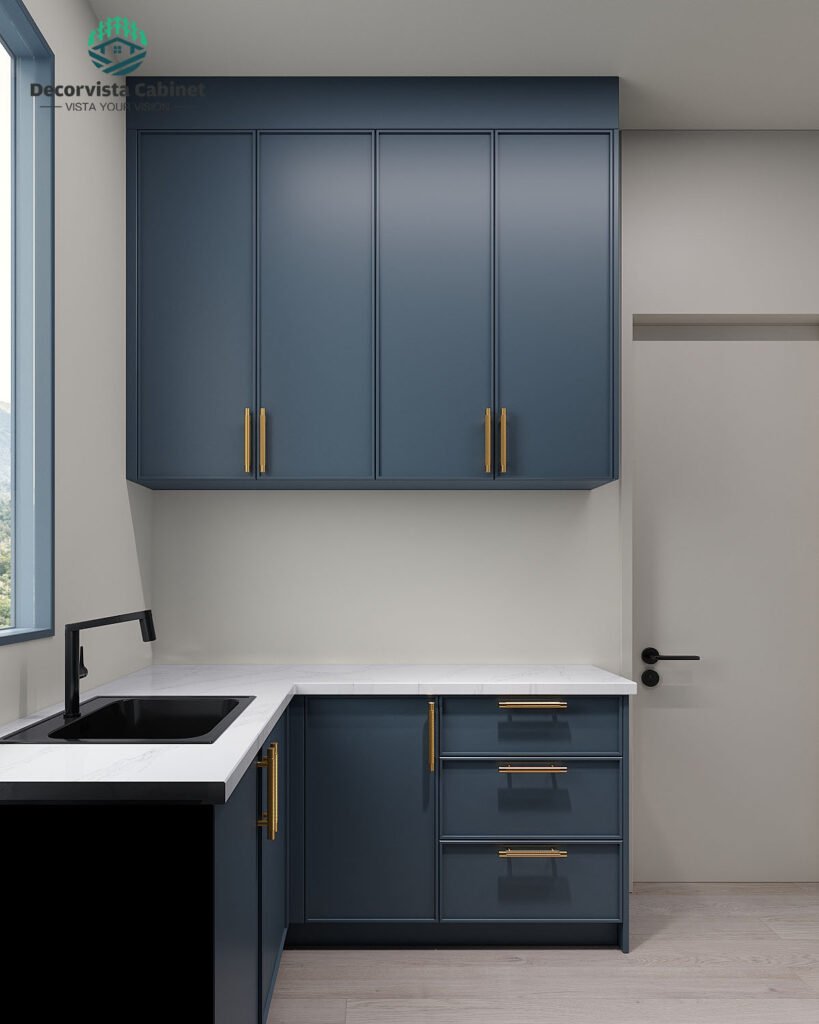
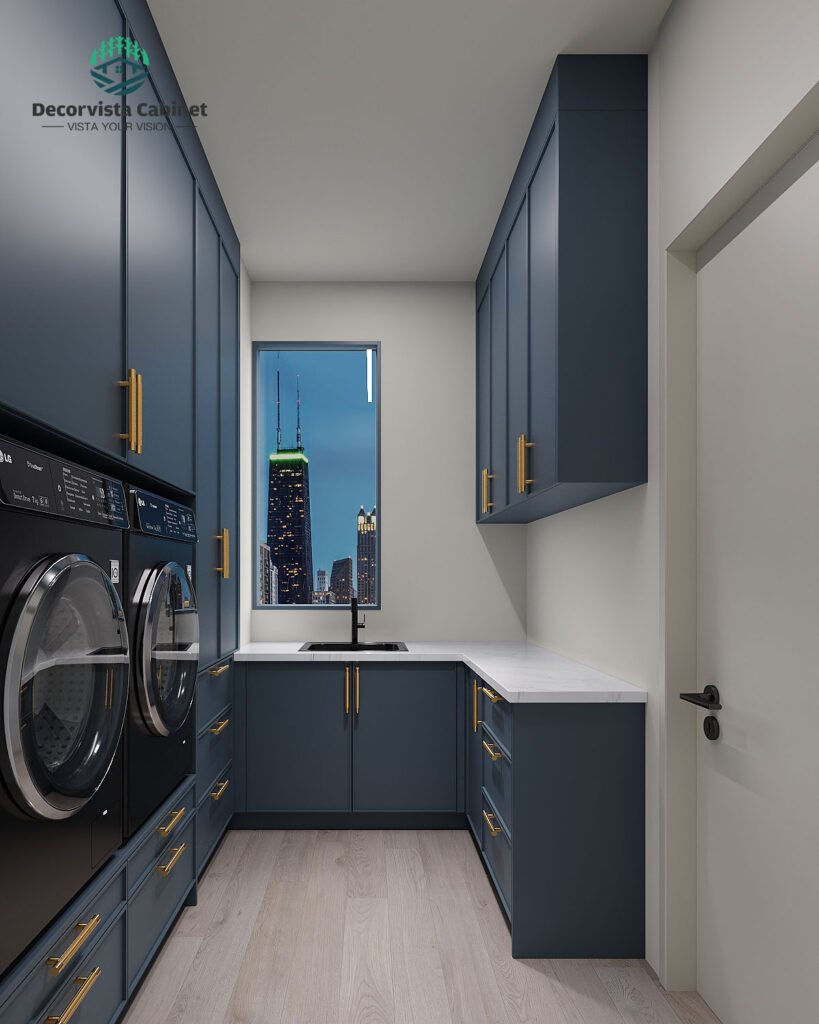
Should kitchen cabinets be installed before the flooring, or the other way around?
While installing flooring first may appear visually seamless, in real-world engineering practice, the overwhelming majority of international projects and experienced installers choose one solution without hesitation:
Install cabinets first, then install flooring.
Below, we break down the logic behind this decision by combining international installation standards, high-end custom project experience, and insights from frontline installers.
I. Why Professionals Prefer “Cabinets First, Flooring Later”
From an engineering perspective, this sequence is not conservative—it is structurally responsible.
1️⃣ Structural Logic: Fixed Elements vs. Finish Materials
Cabinets Permanent, load-bearing fixtures with a typical lifespan of 15–25 years
Flooring (especially wood flooring) Finish materials subject to thermal expansion, contraction, and replacement cycles
Placing heavy cabinets on top of flooring essentially means:
Using an immovable structure to lock a material that must be free to move.
This often leads to:
Floor buckling or warping
Cracks at joints
A significantly shortened flooring lifespan
These issues are especially common with solid wood, engineered wood, and imported flooring systems.
2️⃣ Real Cost Savings: Money That Actually Matters
The area beneath base cabinets is a permanently concealed zone and does not require expensive finish materials.
In a typical kitchen:
Base cabinet footprint: 5–10 m²
Using solid wood or imported flooring
The savings are often enough to upgrade cabinet hardware, drawer systems, or internal accessories.
In high-end projects, the principle is simple: Spend where it is visible, not where it will never be seen.
3️⃣ Long-Term Maintenance: Your Kitchen in 10 Years
Real-life scenario:
Flooring style becomes outdated
Or water leakage causes swelling or damage
Cabinets first → Flooring later
Replace only exposed flooring
Cabinets, countertops, plumbing, and electrical systems remain intact
Flooring first → Cabinets later
Cabinets must be removed
Stone countertops dismantled
Plumbing and electrical disconnected
Reinstallation risks and costs multiply
Time, cost, and risk increase dramatically.
4️⃣ Installation Precision: The Invisible Deciding Factor
Cabinets are extremely sensitive to levelness and load distribution.
Installed directly on leveled concrete or tiled substrates
Cabinet legs can be precisely adjusted
No interference from flooring elasticity
This ensures:
Reduced risk of stone countertop cracking
Long-term door and panel alignment
Smooth, durable drawer and hardware performance
Cabinets-first installation keeps tolerances under control from the start.
II. When Is It Acceptable to Install Flooring First?
If your priority is ultimate design expression, the following scenarios may justify an exception—provided the conditions are clearly understood.
Scenario A: Open-Concept Living, Dining, and Kitchen Areas
Continuous flooring throughout the space
Emphasis on visual continuity
Prerequisites:
Flooring with high water-resistance ratings
Clear understanding that cabinets are not frequently replaced
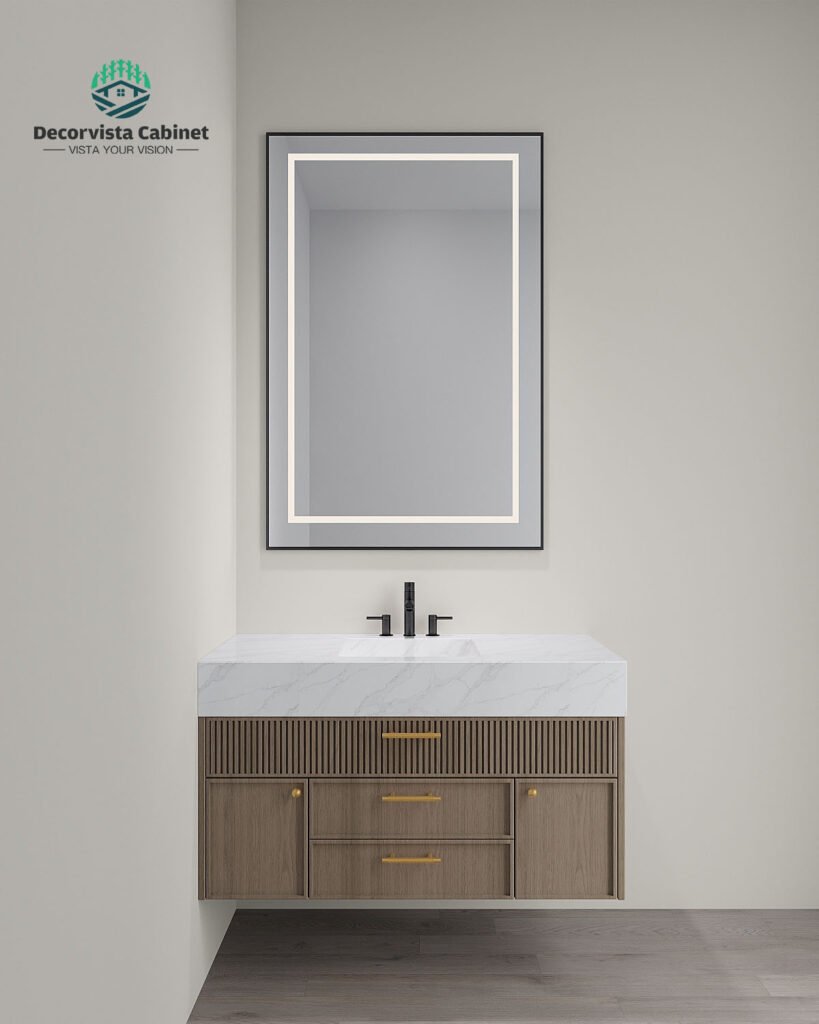
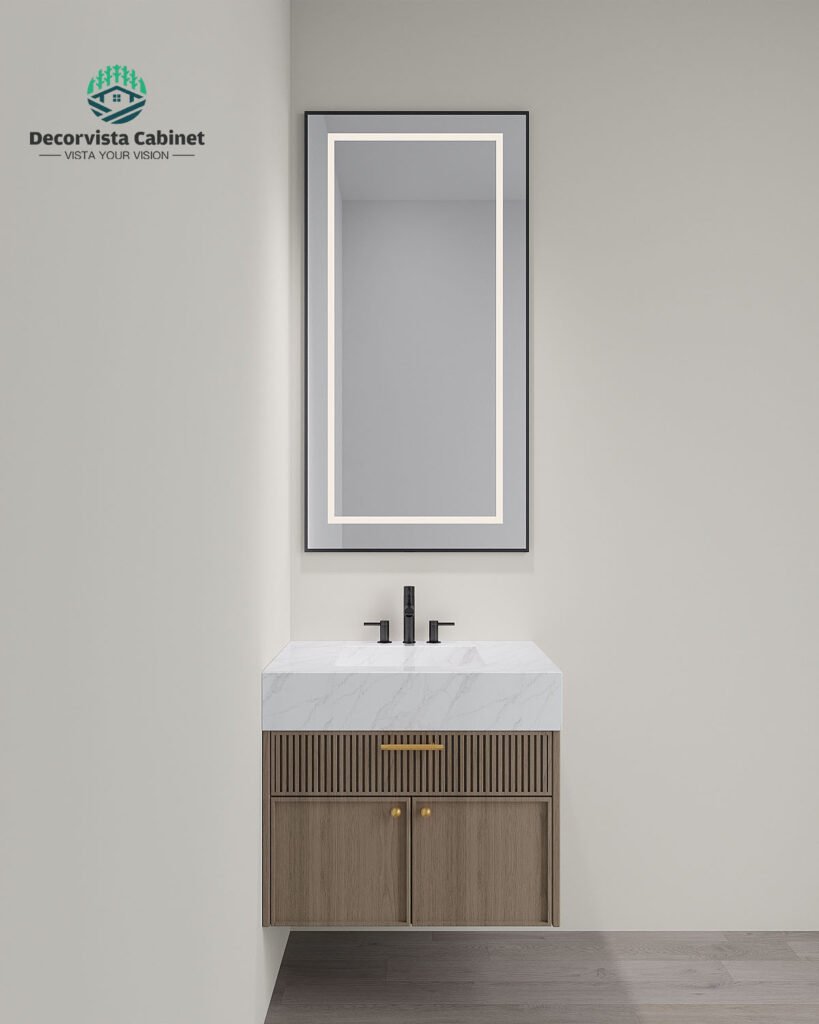
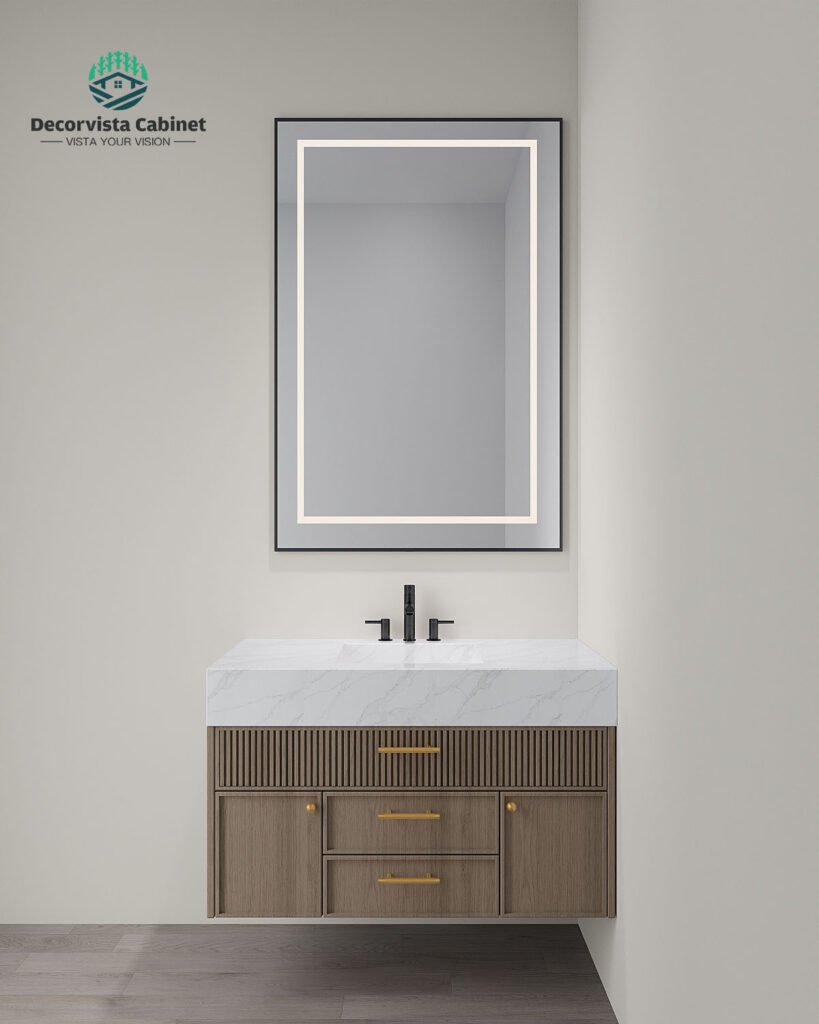
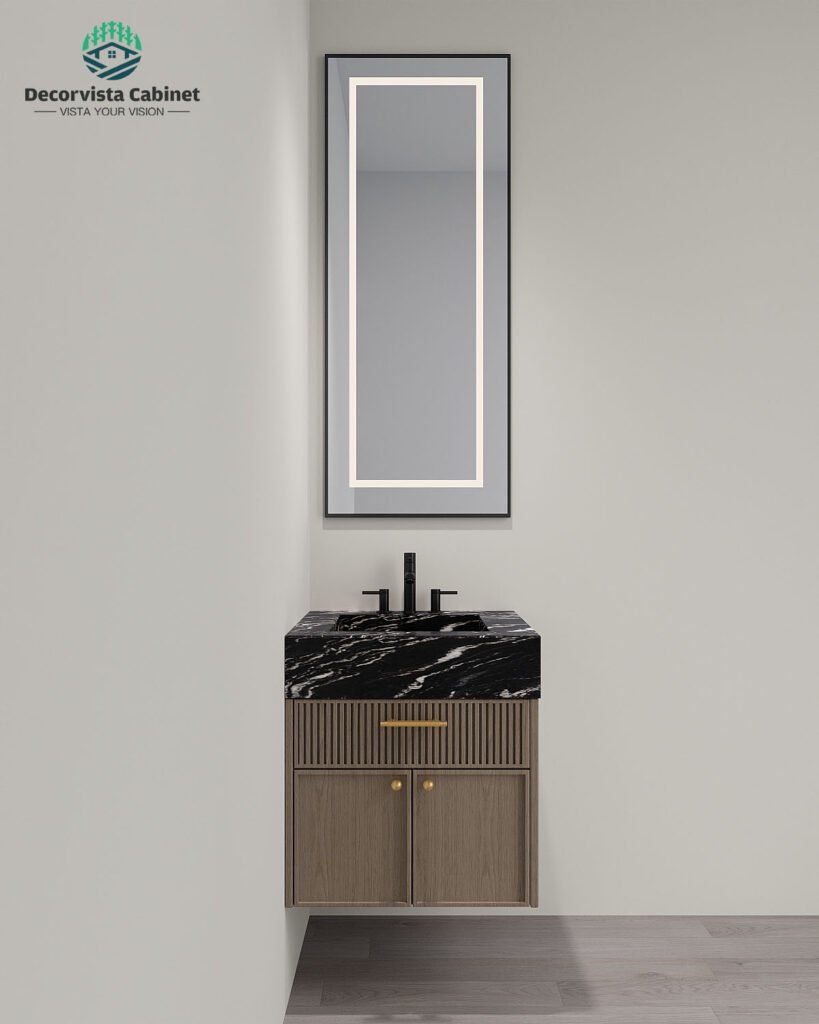
Scenario B: Floating or Suspended Cabinet Design
Cabinets elevated 10–15 cm above the floor
Supported by wall structure or metal frames
In this case, flooring must be installed first to avoid visible gaps or construction dead zones.
Scenario C: High-End System Cabinet Requirements
Certain imported German or Italian modular cabinet systems:
Provide strict installation node drawings
Require fully completed and precisely leveled floors
Always follow the manufacturer’s installation standards in such projects.
III. Recommended Installation Sequence by Flooring Type
Flooring Type
Recommended Sequence
Reason
Tile
Cabinets → Tile
Stable, waterproof, easy to cut
Laminate
Cabinets → Flooring
High expansion/contraction
Solid / Engineered Wood
Cabinets → Flooring
Sensitive to long-term load
SPC / Stone Plastic
Mostly cabinets first
Compression-resistant but still needs expansion gaps
IV. Standard “No-Failure” Construction Workflow (High-End Projects)
Plumbing & electrical rough-in (precise positioning) Floor leveling (critical step) Base cabinet installation Flooring or tile installation (cut to cabinet legs or trim points) Skirting boards / transition trims Stone countertop installation (to avoid early-stage damage) Wall cabinets and built-in appliance installation
This workflow maximizes:
Schedule control
Installation accuracy
Long-term serviceability
💡 A Professional’s Honest Advice
Cabinets are the structural framework meant to last 20 years. Flooring is the skin that will eventually be replaced.
In luxury residential and custom projects, we follow one core principle:
Build the structure first, then refine the finish.
This is not conservatism—it is respect for long-term quality.